Sat, October 17, 2026

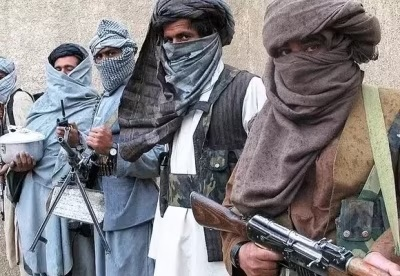
New Delhi — Pakistan is facing renewed internal security challenges as the Tehreek-e-Taliban Pakistan (TTP) moves to restructure and expand itself along the lines of a formal military unit, a development that security agencies believe will lead to a sharp rise in terror attacks in the coming year.
Intelligence Bureau officials say the expansion process is already underway and poses a serious threat, particularly as the TTP has inflicted significant damage on the Pakistan Army in recent years. With Islamabad already struggling to contain the group, officials warn that hostilities could intensify substantially in the near future.
Ahead of its organisational expansion, the TTP has bolstered its propaganda machinery, aggressively leveraging online platforms to amplify its messaging and target the Pakistan Army. Since ending its ceasefire with the Pakistani government in November 2022, the group has sharply escalated attacks, particularly in Balochistan and Khyber Pakhtunkhwa (KP).
Security forces and law enforcement personnel have been frequent targets since the ceasefire collapsed. The TTP has also expanded its administrative footprint, adding new regions under its control, including Gilgit-Baltistan. Significant leadership changes have been introduced within its military structure, with Ehsanullah Ipi, the great-grandson of Faqir Ipi, appointed head of the Southern Military Zone. Hilal Ghazi has been named chief of the Central Military Zone, while Azmatullah Mehsud now leads the political commission. Maulvi Faqir continues as a member of the commission.
Officials further reveal that the TTP is exploring the creation of its own air wing. While still at the planning stage, the initiative could become operational by the end of 2026.
Earlier this month, three Pakistani police personnel were killed in a roadside bomb attack near the Afghan border in KP, an incident Islamabad swiftly attributed to the TTP.
Analysts say Pakistan’s TTP problem shows no signs of abating. The group is believed to have ambitious plans and remains determined to challenge the Pakistani establishment. Its growing strength has also strained relations between Pakistan and the Afghan Taliban. Islamabad has repeatedly accused the Taliban, without presenting evidence, of supporting the TTP and allowing it to use Afghan territory to launch attacks into Pakistan.
Pakistan Army chief Field Marshal Asim Munir has urged the Afghan Taliban to choose between supporting the TTP and maintaining ties with Pakistan. The Taliban, however, have responded by stating that the TTP is Pakistan’s internal issue and should be addressed by Islamabad alone.
In response, Pakistan has reportedly attempted to engineer alliances involving the Islamic State Khorasan Province (ISKP) and Lashkar-e-Taiba to counter the TTP. While ISKP reportedly agreed to the arrangement, largely to secure Pakistani support against the Afghan Taliban, the strategy has yielded limited results. Internal resistance within Lashkar-e-Taiba has further slowed progress, with many members opposed to confronting the TTP or the Afghan Taliban.
Observers note that the ISKP’s broader ambition to overthrow the Taliban and seize control of Afghanistan has largely failed, weakening its effectiveness as a counterweight to the TTP.
Pakistan watchers warn that the TTP is steadily gaining strength, much to the concern of the Pakistani military. They believe the group will be increasingly difficult to contain and could prove far more lethal in the coming year than in the period witnessed so far.
With inputs from IANS




© Copyright
Reporter Post.All Rights Reserved |
Powered by: Aptilogic Software |
 |
Page rendered in 0.0132 seconds.
|
Page rendered in 0.0132 seconds.