
Tue, October 13, 2026
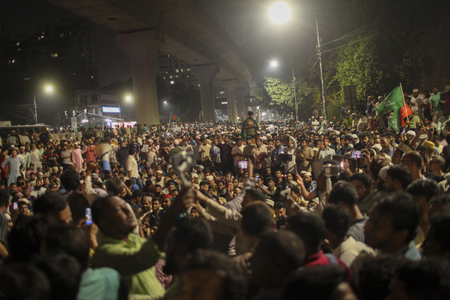
New Delhi: India-Bangladesh relations, already under strain following the ouster of Sheikh Hasina, have deteriorated further amid targeted violence against minority Hindus and a sustained anti-India propaganda campaign allegedly backed by Pakistan’s Inter-Services Intelligence (ISI), Indian intelligence officials have said.
Over the past week, disturbing incidents of violence against the Hindu minority have been reported across Bangladesh. The situation escalated further with attacks on Indian diplomatic missions, prompting New Delhi to lodge strong protests with Dhaka. According to Indian agencies, ISI-backed radical elements are deliberately fuelling unrest with the aim of damaging ties between India and Bangladesh, one of Dhaka’s most important neighbours.
Intelligence inputs indicate that a coordinated online campaign is ensuring that tensions remain high. Violence initially erupted after the shooting of two student leaders, an incident that radical groups allegedly exploited to turn public anger into an anti-India movement. Since then, a consistent narrative blaming India for a range of issues—from political instability to natural disasters—has been pushed aggressively on social media platforms.
Officials said that ISI-linked networks, working through radical elements affiliated with Jamaat-e-Islami, have been tasked with amplifying this narrative. During recent floods in Bangladesh, these channels propagated claims that India deliberately released water to devastate the country. The messaging was circulated so extensively that it fostered widespread resentment against India among sections of the population.
Investigators in Bangladesh have suggested the involvement of the Awami League in the killing of student leader Sharif Osman Hadi. Following the incident, online propaganda focused on alleging that former Prime Minister Sheikh Hasina was being shielded by India. Indian agencies also detected conspiracy theories claiming that Indian intelligence had assisted the Awami League in the killing to avenge Hasina’s removal from power. Officials say such claims directly contributed to violence against Indian interests and minority communities.
Adding to concerns, intelligence agencies have found evidence of a so-called “rule book” being circulated online by ISI-backed radical groups. According to officials, this document instructs citizens to view any cooperation with India as an act of betrayal against Bangladesh. It also promotes the idea that every crisis in the country should be blamed on India and asserts that opposing India is a prerequisite for being considered a patriot.
Social media platforms including Facebook, X, Instagram and Threads are reportedly flooded with anti-India content and references to this rule book, which officials say has played a major role in sustaining the unrest. Posts also allege Indian interference in Bangladesh’s elections and internal affairs, along with claims related to India’s Northeast region. Some content even suggests the separation of the ‘Seven Sisters’ states, falsely claiming it would resolve Bangladesh’s flood problems—an assertion Indian officials have dismissed as baseless and malicious.
Indian intelligence sources believe the objective is to create deep-rooted anti-India sentiment across Bangladesh, similar to public attitudes fostered in Pakistan. Officials noted that many of the social media handles spreading this propaganda are not operated from Bangladesh alone but have been traced to Pakistan and Gulf countries. These accounts are allegedly controlled by the ISI’s online propaganda wing based in Karachi, which has previously been linked to misinformation campaigns and honey-trap operations targeting India.
Bangladesh analysts say these developments are a deliberate attempt to provoke India, particularly ahead of Bangladesh’s general elections scheduled for February. While New Delhi continues to engage diplomatically and is keen to maintain dialogue, officials remain concerned that prolonged exposure to such misinformation is rapidly reshaping public opinion.
“Even if diplomatic ties stabilise, reversing the damage done to public perception will be a major challenge,” an official said, adding that it is crucial for people to recognise the importance of India-Bangladesh relations rather than being driven by a sustained, fake, anti-India narrative.
With inputs from IANS



© Copyright
Reporter Post.All Rights Reserved |
Powered by: Aptilogic Software |
 |
Page rendered in 0.0111 seconds.
|
Page rendered in 0.0111 seconds.