Tue, September 08, 2026

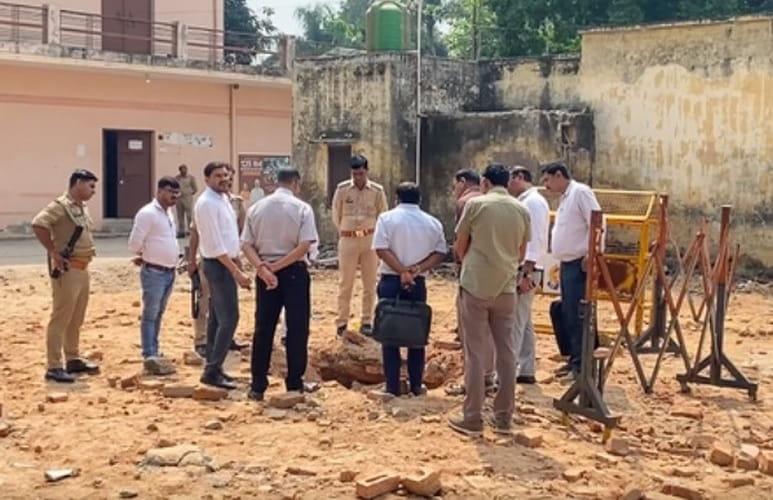
Photo: IANS
A newly discovered well at the site of a demolished mosque in Uttar Pradesh's Saharanpur has added a fresh twist to the ongoing controversy, with an Archaeological Survey of India (ASI) team estimating that the structure could be around 200 to 250 years old.
The nearly 20-foot-deep well was found on Sunday while debris was being cleared from the site inside the Saharanpur Collectorate premises. An ASI team inspected the structure on Monday to determine its age, construction method and possible historical significance.
ASI Assistant Archaeological Officer Manoj Kumar Yadav travelled from Lucknow to Saharanpur for the inspection. He said the visible construction material and architectural features were being examined as part of efforts to establish the nature and history of the structure.
According to Yadav, the well appears to have features associated with construction practices seen during the late-medieval period in parts of the North and Central Ganga Valley. The structure has been built using Lakhauri bricks and lime-surki, materials commonly found in older buildings and structures in the region.
Based on the type of bricks, construction pattern and techniques observed so far, officials have estimated that the well may be approximately 200 to 250 years old.
The ASI official, however, cautioned that the estimate is preliminary. Much of the structure remains filled with debris, making a complete examination difficult. Further investigation and examination of the available material will be necessary before its exact age and historical significance can be established.
The discovery has triggered fresh speculation about the history of the site. Questions have been raised over whether the well could have any connection with the Mughal period, including the era of Emperor Shah Jahan, or whether it might have been associated with a temple or another religious structure in the past.
Yadav, however, did not confirm any such connection and stressed that historical conclusions cannot be drawn without adequate archaeological evidence.
The development has meanwhile intensified the political debate surrounding the demolition of the mosque.
Uttar Pradesh Deputy Chief Minister Brijesh Pathak said the government would continue to focus on maintaining law and order and pointed out that the matter was already before the court.
"We will maintain law and order in Uttar Pradesh. Since the matter is before the court, it would not be appropriate to comment on it. The courts always keep options open. We are committed to maintaining law and order in Uttar Pradesh," Pathak told reporters.
Minister Narendra Kashyap criticised Samajwadi Party leader Akhilesh Yadav's questioning of the demolition and said the discovery of the well should also be taken into consideration while discussing the dispute.
Speaking to IANS, Kashyap claimed that the well had existed at the location before the mosque was constructed and alleged that the religious structure had been built over it. He maintained that the demolition had taken place following due legal procedure and argued that the discovery should be viewed in the context of the legal proceedings concerning the site.
Minister O.P. Rajbhar also referred to the discovery while commenting on the controversy.
"It has now been confirmed that the mosque was demolished following the court's order. Now, when the well is being inspected, things are being revealed," he said.
The discovery is likely to keep the dispute in the spotlight as authorities continue examining the structure. For now, the precise age, original purpose and historical association of the well remain subjects for further archaeological investigation rather than established conclusions.



© Copyright
Reporter Post.All Rights Reserved |
Powered by: Aptilogic Software |
 |
Page rendered in 0.023 seconds.
|
Page rendered in 0.023 seconds.