Thu, April 02, 2026

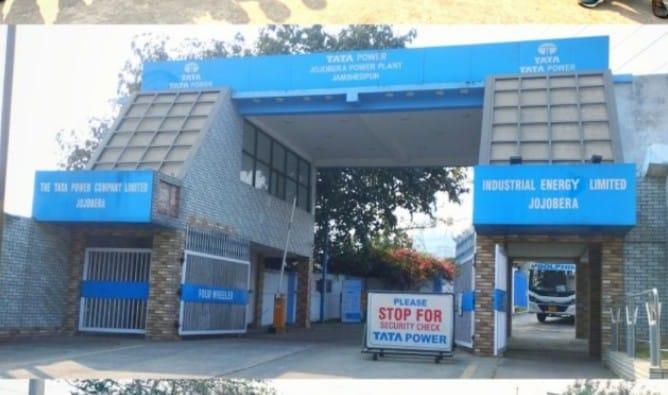
Jamshedpur: In a significant regulatory move, the Jharkhand State Electricity Regulatory Commission (JSERC) has rejected a Rs 133.89 crore investment proposal by Tata Power Company Limited (TPCL) for its thermal power plant in Jamshedpur.
The proposal aimed at the renovation and modernization of Unit-2 and Unit-3 of the plant.
However, JSERC declined approval after the company failed to submit the mandatory Residual Life Assessment (RLA) report, a critical requirement for evaluating the remaining operational viability of ageing units.
As per regulatory norms, coal-based thermal plants typically have a lifespan of 25 years. Both Unit-2 and Unit-3, each with a capacity of 120 MW, have already exceeded this limit.
The Commission emphasized that without a proper technical assessment of the plant’s remaining life, approving such a substantial investment would be unjustified.
JSERC also made it clear that, in the absence of the RLA report, the proposed expenditure cannot be included in electricity tariffs.
This effectively prevents the company from passing on the cost burden to consumers, safeguarding electricity users in Jamshedpur from potential tariff hikes linked to unverified investments.
In addition, the Commission tightened norms related to auxiliary power consumption. While the company had sought approval for 11% consumption citing the installation of Flue Gas Desulfurization (FGD) systems, JSERC capped the permissible limit at 10%.
Any consumption beyond this threshold will now have to be borne by the company and cannot be recovered from consumers.
The order underscores the regulator’s focus on accountability and technical validation in infrastructure investments, while maintaining a balance between sectoral development and consumer protection.
Tata Power’s Jamshedpur plant, commissioned in 1996, remains a key electricity source for both industrial and residential users in the city. With a total installed capacity of 547.5 MW across five units, the plant has been operational for nearly three decades.
However, ageing infrastructure, coupled with evolving environmental and efficiency standards, has placed it under increasing regulatory scrutiny.




| 14-09-2018 | ||||||
| Sl No. | Parameters | Actual Data(µg/m3) | Standard Limit(µg/m3) |
|---|---|---|---|
| 1 | PM 10 | 64 | 100 |
| 2 | PM 2.5 | 33 | 60 |
| 3 | SO2 | 55.3 | 80 |
| 4 | NO2 | 58.2 | 80 |
| 14-09-2018 | ||||||
| Station | Temperature(degree centigrade) | Rainfall(mm) | Relative humidity(%) | |||
|---|---|---|---|---|---|---|
| Max | Min | Past 24 hrs. | Since 1st March, 2018 | Max | Min | |
| Ranchi | 31.0 | 22.5 | 000.0 | 1010.1 | 95 | 66 |
| Jamshedpur | 34.1 | 26.2 | 000.0 | 1252.8 | 87 | 58 |
| Bokaro | 33.5 | 24.6 | 015.2 | 824.0 | 92 | 79 |
| Daltonganj | 32.6 | 24.9 | 004.2 | 960.9 | 95 | 67 |
© Copyright
Reporter Post.All Rights Reserved |
Powered by: Aptilogic Software |
 |
Page rendered in 1.1004 seconds.
|
Page rendered in 1.1004 seconds.