Mon, December 15, 2025
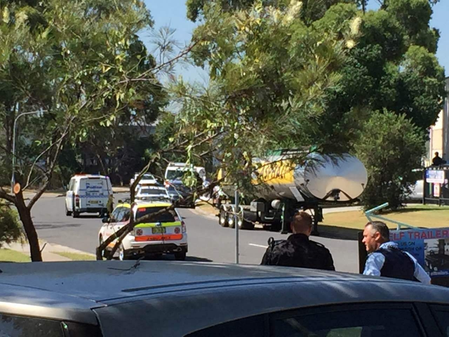
New Delhi: The deadly shooting at Sydney’s Bondi Beach on Sunday left 16 people dead and more than 40 injured, with investigators saying that several elements of the attack point towards possible links with the Islamic State (IS). The incident occurred when a crowd of over 1,000 people had gathered at the venue on the first day of Hanukkah.
The two shooters have been identified as 24-year-old Naveed Akram and 50-year-old Sajid Akram. While the motive behind the attack is yet to be officially established, investigators recovered two Islamic State flags from the attackers’ vehicle. One of the flags was also visible in footage from the scene, placed on the bonnet of the car used by the attackers.
Security agencies have identified Naveed Akram and his father, Sajid Akram, as the perpetrators. Sajid Akram was killed during the exchange of gunfire with security forces, while Naveed Akram is currently hospitalised and remains under police guard.
Counter-terrorism experts say the planning and execution of the attack bear the hallmarks of the Islamic State. Although authorities have not formally confirmed IS involvement, investigators believe the incident cannot be classified as a lone-wolf attack, given the involvement of more than one assailant. Experts also suggest that the choice of target — a gathering linked to a Jewish festival — may indicate an attempt to send a broader ideological message.
Australian agencies are continuing their probe, with multiple leads pointing towards possible IS inspiration. Naveed Akram had earlier come under the radar of Australia’s domestic intelligence agency, ASIO, around six years ago for his alleged links with Sydney-based Islamic State operatives. His name surfaced during the July 2019 arrest of El Matari, a hardened IS terrorist who later described himself as a commander of the outfit in Australia and was planning a large-scale attack in Sydney. Matari is currently serving a seven-year prison sentence.
ASIO Director-General Mike Burgess said that Naveed Akram was previously known to authorities, though not assessed as an immediate threat at the time. “One of these individuals was known to us, but not in an immediate-threat perspective, so we need to look into what happened here,” Burgess said.
Investigators believe the duo may have planned and executed the attack independently, though inspired by Islamic State ideology. Experts say the deliberate targeting of a Jewish gathering aligns with past IS-linked attacks in Europe and elsewhere. Australia’s Prime Minister Anthony Albanese also stated that the attackers appeared to have deliberately targeted the Jewish community on the first day of Hanukkah.
An Indian Intelligence Bureau official noted that Naveed Akram’s earlier examination by Australian intelligence suggested his awareness of an IS-linked plot foiled in 2019. The official said it appears Naveed may have gone underground after coming under scrutiny and waited for an opportunity to carry out the attack years later.
According to investigators, Sajid Akram owned a fruit shop, while Naveed had reportedly lost his bricklaying job about two months ago after his employer became insolvent. Media reports claim that both were Pakistani nationals. Police also said that Sajid Akram had held a firearms licence for nearly 10 years.
The investigation is ongoing, with authorities examining all possible angles, including links to extremist organisations.
—With inputs from IANS



| 14-09-2018 | ||||||
| Sl No. | Parameters | Actual Data(µg/m3) | Standard Limit(µg/m3) |
|---|---|---|---|
| 1 | PM 10 | 64 | 100 |
| 2 | PM 2.5 | 33 | 60 |
| 3 | SO2 | 55.3 | 80 |
| 4 | NO2 | 58.2 | 80 |
| 14-09-2018 | ||||||
| Station | Temperature(degree centigrade) | Rainfall(mm) | Relative humidity(%) | |||
|---|---|---|---|---|---|---|
| Max | Min | Past 24 hrs. | Since 1st March, 2018 | Max | Min | |
| Ranchi | 31.0 | 22.5 | 000.0 | 1010.1 | 95 | 66 |
| Jamshedpur | 34.1 | 26.2 | 000.0 | 1252.8 | 87 | 58 |
| Bokaro | 33.5 | 24.6 | 015.2 | 824.0 | 92 | 79 |
| Daltonganj | 32.6 | 24.9 | 004.2 | 960.9 | 95 | 67 |
© Copyright
Reporter Post.All Rights Reserved |
Powered by: Aptilogic Software |
 |
Page rendered in 0.0159 seconds.
|
Page rendered in 0.0159 seconds.