Sun, December 28, 2025
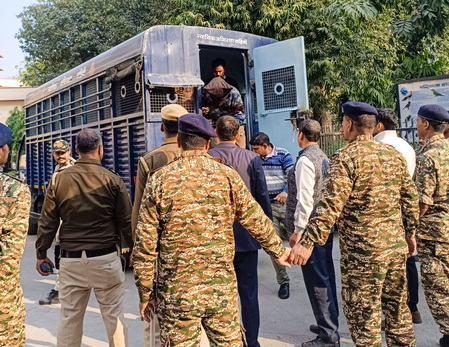
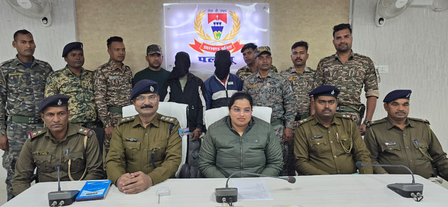
New Delhi - Investigations into the Faridabad terror module have revealed that it was not only planning a series of blasts in and around Delhi but was also attempting to revive separatism in Jammu and Kashmir. Officials say the revival of separatist ideology was seen as a precursor to restoring the ecosystem that once fueled unrest, stone pelting, and terror recruitment in the Valley.
According to officials, separatism in Kashmir collapsed after the abrogation of Article 370. Increased inclusiveness and a series of money-laundering crackdowns on separatist leaders played a major role in dismantling the network. While Pakistan has continued to push terrorism in the region, it realised that separatists — who once drove the narrative and influenced youth — were vital for sustaining militancy.
Indian agencies have since focused heavily on preventing any revival of separatism, given its deep links to terror recruitment. An official involved in the Faridabad module probe said multiple raids in Jammu and Kashmir yielded incriminating material, including propaganda and literature belonging to banned separatist organisations.
Mufti Irfan Ahmed, identified as the mastermind of the Faridabad module, admitted during interrogation that the group had been working to restore separatist influence in the Valley. Their goal, he said, was to recreate the pre-2019 environment when separatist groups actively mobilised youth, issued Friday calls for stone pelting, and encouraged large gatherings at militants’ funerals to build sympathy and facilitate recruitment.
With separatist structures dismantled, recruitment by terror outfits such as Jaish-e-Mohammed, Lashkar-e-Taiba, and Hizbul Mujahideen has sharply declined. An Intelligence Bureau official noted that the end of separatism meant the collapse of the ideology that once pushed Kashmir’s youth toward violence.
The official added that the government’s renewed focus on development, tourism revival, and constructive youth engagement has helped stabilize the Valley. He pointed out that Pakistan-backed attacks like the one in Pahalgam were intended to scare away tourists and derail this progress.
Investigators have uncovered extensive evidence showing that the Faridabad module was preparing propaganda — posters, pamphlets, and separatist messaging — to be circulated across Jammu and Kashmir. Their aim was to reignite anti-India sentiment, glorify separatists, and call for the return of Friday stone-pelting protests.
The group was also planning large gatherings where separatist ideology would be promoted. Mufti Irfan allegedly spearheaded these plans and had begun organizing meetings to rebuild organisational structures.
Further proof emerged during a raid in Pulwama on Sunday, where police seized posters, pamphlets, and other literature linked to banned separatist outfits. Officials say a detailed analysis of the seized material is underway, but initial assessments indicate that a major organised drive to revive separatism was already in progress.
With inputs from IANS



| 14-09-2018 | ||||||
| Sl No. | Parameters | Actual Data(µg/m3) | Standard Limit(µg/m3) |
|---|---|---|---|
| 1 | PM 10 | 64 | 100 |
| 2 | PM 2.5 | 33 | 60 |
| 3 | SO2 | 55.3 | 80 |
| 4 | NO2 | 58.2 | 80 |
| 14-09-2018 | ||||||
| Station | Temperature(degree centigrade) | Rainfall(mm) | Relative humidity(%) | |||
|---|---|---|---|---|---|---|
| Max | Min | Past 24 hrs. | Since 1st March, 2018 | Max | Min | |
| Ranchi | 31.0 | 22.5 | 000.0 | 1010.1 | 95 | 66 |
| Jamshedpur | 34.1 | 26.2 | 000.0 | 1252.8 | 87 | 58 |
| Bokaro | 33.5 | 24.6 | 015.2 | 824.0 | 92 | 79 |
| Daltonganj | 32.6 | 24.9 | 004.2 | 960.9 | 95 | 67 |
© Copyright
Reporter Post.All Rights Reserved |
Powered by: Aptilogic Software |
 |
Page rendered in 0.0497 seconds.
|
Page rendered in 0.0497 seconds.