
Tue, November 10, 2026


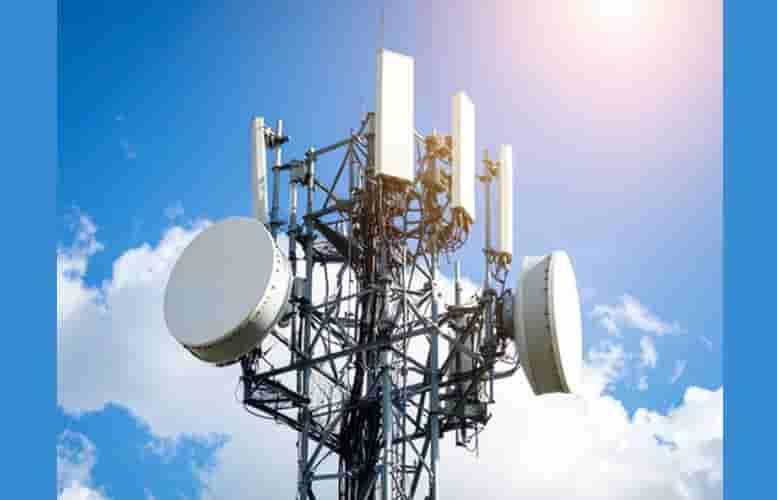
Photo: IANS
New Delhi: The Telecom Regulatory Authority of India (TRAI) has introduced a revised regulatory framework for port charges on Internet Protocol (IP)-based interconnection, aimed at modernising telecom network connectivity and ensuring seamless communication between subscribers of different service providers.
The regulator on Monday issued the Telecommunication Interconnection (Port Charges) (Third Amendment) Regulations, 2026, which will come into effect from January 1, 2027. The new framework extends the existing provisions for E1/Time Division Multiplexing (TDM)-based interconnection ports to include modern IP-based technologies.
According to the Ministry of Communications, the amendment seeks to bring the regulatory framework in line with technological advancements and evolving requirements of the telecommunications sector.
Interconnection refers to the technical, operational and commercial arrangements through which two or more telecom networks are connected, enabling traffic to move between them and allowing subscribers of different service providers to communicate without disruption.
Under the revised regulations, the definition of a port has been expanded to cover both conventional E1 ports, with a capacity of 2.048 Mbps, and IP ports, whose bandwidth is measured in Mbps or Gbps.
TRAI has prescribed annual ceiling charges of Rs 5.6 lakh for a 1 Gbps IP port and Rs 42.3 lakh for a 10 Gbps IP port. These ceilings establish the maximum permissible charges for the respective port capacities.
The amended framework also provides greater flexibility to telecom operators in negotiating interconnection arrangements. Interconnection providers and seekers can mutually agree on charges lower than the prescribed ceilings.
They can also negotiate IP-port capacities other than the specified 1 Gbps and 10 Gbps options, provided the charges are determined transparently using the same methodology prescribed for the standard capacities.
The amendment follows TRAI's review of the existing regulatory framework, initiated through a Pre-Consultation Paper. The exercise was intended to ensure that interconnection rules remain relevant, transparent and supportive of efficient connectivity among telecom service providers.
Section 11(1)(b) of the TRAI Act, 1997, empowers the regulator to prescribe interconnection terms and conditions between service providers and ensure technical compatibility and effective connectivity across different networks.
The original Telecommunication Interconnection (Port Charges) Regulation, 2001, governs the charges payable by an interconnection seeker to a provider for terminating interconnection links at the latter's point of interconnection.
However, the existing framework was primarily designed around legacy E1/TDM-based technology, with the prescribed charges last revised in 2012. The latest amendment marks a significant step towards incorporating IP-based infrastructure into India's telecom interconnection regulatory regime.




© Copyright
Reporter Post.All Rights Reserved |
Powered by: Aptilogic Software |
 |
Page rendered in 0.0115 seconds.