Tue, July 07, 2026


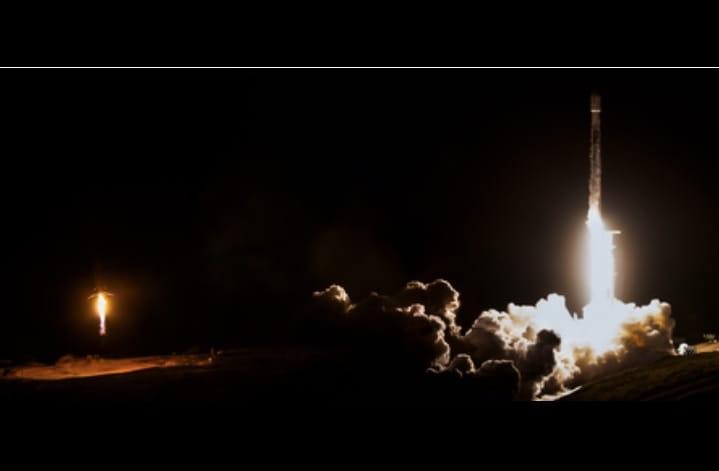
New Delhi: Bengaluru-based space technology startup GalaxEye has announced plans to launch two next-generation OptoSAR satellites within the next 24 months after its maiden Mission Drishti successfully validated several critical technologies, despite the spacecraft later suffering an in-orbit anomaly.
Launched aboard a SpaceX mission on May 3, Mission Drishti became the world's first OptoSAR satellite. During its Launch and Early Orbit Phase (LEOP), the satellite successfully established communication and completed key mission objectives, including validating spacecraft systems, deployment mechanisms, attitude control, onboard computing and communication systems.
The mission also showcased GalaxEye's fully in-house mission operations capability through its Mission Control Centre in Bengaluru, demonstrating the company's ability to independently design, launch and operate advanced Earth observation satellites.

According to the company, the mission successfully verified critical technologies, operational processes and infrastructure needed for future Earth observation missions. The achievement also earned recognition from Narendra Modi and several industry leaders, underscoring its importance for India's growing private space sector.
However, the spacecraft encountered an anomaly during the final stage of LEOP following a powerful geomagnetic solar storm. Preliminary findings suggest that radiation generated by the extreme space weather event may have disrupted a critical onboard system.
As a result, communication with the satellite became intermittent before being completely lost. Although recovery efforts are still underway, the company said the chances of re-establishing contact remain low.
GalaxEye Founder and CEO Suyash Singh described Mission Drishti as the result of years of engineering and innovation, adding that the mission has delivered valuable technical insights that will strengthen the company's future satellite programmes.
He said GalaxEye is accelerating efforts to bring a larger share of its supply chain, manufacturing and satellite development activities in-house to improve quality control, reliability and oversight across the entire production process.
Incorporating the lessons learned from Mission Drishti, the company is now developing an upgraded spacecraft architecture and remains on track to launch two new OptoSAR satellites over the next two years while significantly expanding its in-house capabilities.
With inputs from IANS




| 14-09-2018 | ||||||
| Sl No. | Parameters | Actual Data(µg/m3) | Standard Limit(µg/m3) |
|---|---|---|---|
| 1 | PM 10 | 64 | 100 |
| 2 | PM 2.5 | 33 | 60 |
| 3 | SO2 | 55.3 | 80 |
| 4 | NO2 | 58.2 | 80 |
| 14-09-2018 | ||||||
| Station | Temperature(degree centigrade) | Rainfall(mm) | Relative humidity(%) | |||
|---|---|---|---|---|---|---|
| Max | Min | Past 24 hrs. | Since 1st March, 2018 | Max | Min | |
| Ranchi | 31.0 | 22.5 | 000.0 | 1010.1 | 95 | 66 |
| Jamshedpur | 34.1 | 26.2 | 000.0 | 1252.8 | 87 | 58 |
| Bokaro | 33.5 | 24.6 | 015.2 | 824.0 | 92 | 79 |
| Daltonganj | 32.6 | 24.9 | 004.2 | 960.9 | 95 | 67 |
© Copyright
Reporter Post.All Rights Reserved |
Powered by: Aptilogic Software |
 |
Page rendered in 0.0721 seconds.
|
Page rendered in 0.0721 seconds.