Wed, October 14, 2026

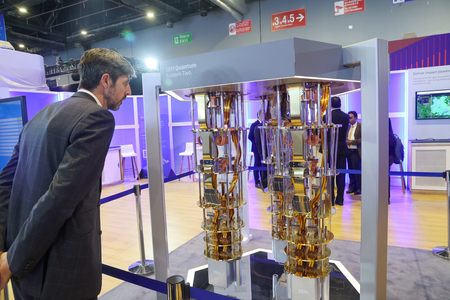
New Delhi: The India AI Impact Summit 2026 has highlighted the growing maturity of India’s applied artificial intelligence ecosystem, with a strong focus on converting research into deployable, real-world solutions, according to a report by Khalsa Vox.
The report noted that the emphasis on applied AI, integration with education, and industry-ready robotics reflects an ecosystem moving beyond experimental concepts toward practical tools for defence, agriculture, education and industrial applications.
Rather than focusing solely on futuristic ideas, many exhibitors showcased locally engineered solutions aimed at solving on-ground challenges. Among the key demonstrations was a hybrid vertical take-off-and-landing unmanned aerial vehicle that merges the agility of multi-rotor systems with the endurance of fixed-wing aircraft. Designed for long-duration surveillance and emergency operations, the platform integrates AI to support navigation and real-time data analysis.
Another notable innovation was an AI-powered agricultural drone capable of early detection of crop diseases through advanced imaging. The system enables precision spraying, helping farmers reduce excessive use of chemical fertilisers.
The report also highlighted a range of drone technologies developed for surveillance, disaster response and logistics, underscoring closer collaboration between engineers and operational agencies. Project leaders observed that design priorities have shifted toward adaptable platforms that can be customised for specific terrains and mission requirements.
Academic institutions were commended for their expanding role in developing mission-ready unmanned systems. Several organisations presented AI-focused learning models that blend classroom instruction with extensive hands-on development.
Grassroots STEM initiatives drew particular praise, especially modular robotics kits designed for school students. These kits allow learners to assemble and program machines using block-based coding, Python or C++, introducing them early to mechanics, automation and artificial intelligence.
Inspection robotics also attracted attention, including a climbing robot for wind-turbine maintenance that uses AI-based vision and magnetic adhesion to scale metal structures and perform routine inspection tasks autonomously.
With inputs from IANS



© Copyright
Reporter Post.All Rights Reserved |
Powered by: Aptilogic Software |
 |
Page rendered in 0.0176 seconds.
|
Page rendered in 0.0176 seconds.