Sun, October 18, 2026


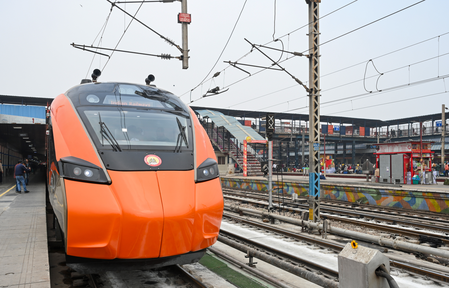
The Centre has sanctioned three major railway multi-tracking projects spanning 12 districts across Delhi, Haryana, Maharashtra, and Karnataka, with a total investment of ?18,509 crore. The projects aim to expand the network of Indian Railways by approximately 389 kilometres, significantly boosting capacity and operational efficiency.
The projects have been planned under the PM-Gati Shakti National Master Plan, focusing on strengthening multi-modal transport connectivity and enhancing logistics efficiency through coordinated planning and consultations with stakeholders. The initiatives are expected to improve the movement of passengers, goods, and services while providing better connectivity to nearly 3,902 villages with an estimated population of around 97 lakh.
The proposals were cleared by the Cabinet Committee on Economic Affairs, chaired by Narendra Modi. The approved projects include the construction of the third and fourth railway lines on the Kasara–Manmad route, the Delhi–Ambala route, and the Ballari–Hosapete route.
Officials stated that the expansion of track capacity would significantly enhance train mobility, improve service reliability, and help ease congestion on busy rail corridors. The government added that the projects align with the vision of building a self-reliant India by promoting regional development and creating employment and self-employment opportunities.
The enhanced railway infrastructure is also expected to improve connectivity to major tourist locations, including Trimbakeshwar Jyotirlinga, Hampi, Ballari Fort, Daroji Sloth Bear Sanctuary, and Tungabhadra Dam, among others.
According to the government, these routes play a crucial role in transporting key commodities such as coal, steel, iron ore, cement, limestone, bauxite, containers, foodgrains, sugar, fertilisers, and petroleum products. The capacity expansion is expected to generate additional freight traffic of nearly 96 million tonnes per annum, further strengthening the country’s logistics and supply chain network.
With inputs from IANS




© Copyright
Reporter Post.All Rights Reserved |
Powered by: Aptilogic Software |
 |
Page rendered in 0.0105 seconds.
|
Page rendered in 0.0105 seconds.