Thu, October 15, 2026

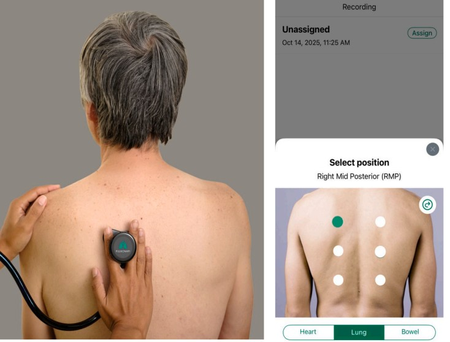
New Delhi- As tuberculosis (TB) remains the world’s deadliest infectious disease, a new study suggests that artificial intelligence (AI)-powered digital stethoscopes could play a crucial role in addressing major screening challenges, particularly in remote and underserved regions.
In a commentary published in the journal Med (Cell Press), global health experts highlighted that integrating stethoscopes with digital technology and AI could help overcome persistent barriers in screening programmes, including under-detection, high operational costs, and unequal access to healthcare services.
“AI-enabled digital stethoscopes have shown encouraging accuracy and practicality in detecting lung and cardiovascular abnormalities, with early TB studies producing promising outcomes. However, further training and validation across diverse, high-burden regions are necessary to fully assess the potential of this technology,” said corresponding author Madhukar Pai of McGill University, Canada, along with researchers from the UAE, Germany, and Switzerland.
According to the World Health Organization (WHO), nearly 2.7 million TB cases remain undetected by existing screening programmes. Traditional symptom-based screening often fails to identify individuals with asymptomatic or subclinical TB, further complicating early diagnosis.
Although the WHO has recently endorsed several AI-driven computer-aided detection (CAD) tools and ultra-portable radiography equipment, their high operating expenses and initial infrastructure requirements pose significant obstacles. These challenges are especially pronounced in primary healthcare settings and among pregnant women, where radiation exposure raises additional concerns.
Researchers noted that AI has significant potential in screening applications beyond radiographic analysis. One emerging approach involves analysing acoustic biomarkers—disease-related sounds that may be difficult or impossible for the human ear to detect. AI-based systems can interpret cough patterns and lung auscultation data to evaluate breathing sounds more accurately.
Evidence from high TB-burden countries such as India, Peru, South Africa, Uganda, and Vietnam indicates that AI-assisted auscultation could serve as an effective screening and triage method.
“AI digital stethoscopes could become viable alternatives to imaging-based screening methods, helping expand access to diagnostic care for populations that lack radiography facilities,” the researchers said.
They further emphasised that such devices offer a scalable, cost-effective, and patient-focused solution that could significantly strengthen global TB case detection efforts.
With inputs from IANS



© Copyright
Reporter Post.All Rights Reserved |
Powered by: Aptilogic Software |
 |
Page rendered in 0.0148 seconds.
|
Page rendered in 0.0148 seconds.