Sun, October 18, 2026


New Delhi- Researchers at the Indian Institute of Technology (IIT) Bombay have developed a simpler and more efficient technique to recover immune cells cultivated in laboratories for T-cell–based cancer therapies.
In advanced immunotherapy treatments such as CAR T-cell therapy, T-cells — a type of immune cell — are extracted from a patient’s blood, modified and multiplied in laboratories, and then reintroduced into the patient’s body to combat cancer.
These lab-grown cells must be collected carefully to ensure they remain alive and functional when infused back into patients. Therefore, developing safe and effective methods for growing and retrieving T-cells is crucial for the success of such therapies.
“Cell recovery sounds simple on paper, but in practice it is one of the biggest challenges,” said Professor Prakriti Tayalia from the Department of Biosciences and Bioengineering at IIT Bombay. “Without sufficient healthy cells, proper testing and therapeutic use become difficult,” she added.
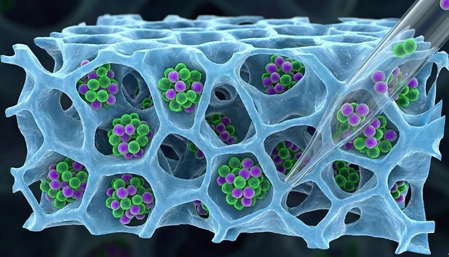
To closely replicate the body’s natural environment, the research team used a specialised scaffold created through a process known as electrospinning. These electrospun scaffolds resemble thin mats made of extremely fine fibres, similar to a dense fishing net.
The researchers cultivated Jurkat T-cells — a human cell line commonly used in laboratory studies of T-cell biology, cancer, and HIV — within electrospun scaffolds made from polycaprolactone. Microscopic observations revealed that the cells actively migrated into the scaffold and became firmly embedded between the fibres.
The study also found that retrieving the cells using trypsin, an enzyme commonly used in laboratories, resulted in higher cell death. However, when the researchers used accutase, a milder enzyme, a significantly larger number of cells survived and functioned similarly to healthy T-cells. These cells formed clusters — an important step before T-cells multiply — and continued to grow successfully after recovery.
“Harsh treatments using enzymes such as trypsin can damage crucial surface proteins required for immune signalling and activation, thereby reducing the therapeutic effectiveness of the cells. Accutase appears gentle enough to prevent this damage,” Tayalia explained.
The findings, published in the journal Biomaterials Science, could assist laboratories in utilising such scaffolds more effectively while preparing cells for treatments like CAR T-cell therapy.
Tayalia emphasised that each stage in the preparation process is critical for delivering advanced therapies to patients. “How we cultivate and retrieve cells can significantly influence treatment outcomes,” she said.
With inputs from IANS




© Copyright
Reporter Post.All Rights Reserved |
Powered by: Aptilogic Software |
 |
Page rendered in 0.0121 seconds.
|
Page rendered in 0.0121 seconds.