Mon, October 12, 2026

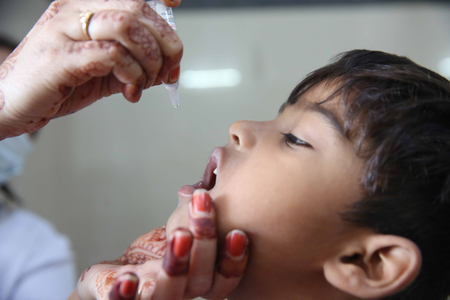
New Delhi: Sharp reductions in global aid, particularly by the United States and European nations, could undo decades of progress in combating major diseases and result in an estimated 22.6 million additional deaths by 2030, according to a new study published on Tuesday in The Lancet Global Health.
The peer-reviewed study, led by the Barcelona Institute for Global Health (ISGlobal) in Spain, warns that the projected deaths would span all age groups, including 5.4 million children under the age of five. The impact would be felt across 93 low- and middle-income countries, including India.
The research highlights that Sub-Saharan Africa would be the worst affected region, with 38 of the 93 countries analysed located there. In Asia, 21 countries — including India — face significant risk, while 12 countries each in Latin America, the Middle East, and North Africa could also be impacted. Additionally, 10 European countries, including Ukraine, are expected to suffer adverse effects.
“Ending this support now would not only reverse hard-earned gains but would directly translate into millions of preventable deaths among adults and children in the coming years. Budgetary decisions taken today by donor countries will have irreversible consequences for millions of people for years to come,” said Davide Rasella, study coordinator, ICREA Research Professor at ISGlobal, and researcher at the Brazilian Institute of Collective Health.
The study notes that between 2002 and 2021, official development assistance (ODA) played a crucial role in reducing global child mortality by 39 per cent. It also helped cut HIV/AIDS-related deaths by 70 per cent, and reduced deaths due to malaria and nutritional deficiencies by 56 per cent. These gains were achieved across the 93 countries studied, which together account for 75 per cent of the world’s population.
International aid declined in 2024 for the first time in six years, with major donors such as the US, UK, France, and Germany significantly reducing their ODA contributions — the first such reduction in nearly three decades.
To assess the potential consequences of continued funding cuts, researchers modelled two scenarios for the period from 2025 to 2030. Under a moderate defunding scenario involving an annual reduction of 10.6 per cent — based on average cuts in 2024–2025 — an estimated 9.4 million preventable deaths could occur, including 2.5 million children under five.
In a more severe scenario, reflecting $32 billion (15.1 per cent) in aid cuts between 2024 and 2025, the study projects over 22.6 million additional deaths overall, including 5.4 million children under the age of five.
“These findings highlight the immense moral cost of the zero-sum approach adopted by many political leaders and serve as an urgent call to action to prevent widespread and avoidable human suffering,” said Dr. Rajiv J. Shah, President of The Rockefeller Foundation, which supported the study.
With inputs from IANS



© Copyright
Reporter Post.All Rights Reserved |
Powered by: Aptilogic Software |
 |
Page rendered in 0.0116 seconds.
|
Page rendered in 0.0116 seconds.