Sat, October 17, 2026

Ahmedabad — Indian Railways has marked a significant move towards cleaner and greener rail transportation with the induction of the country’s first liquefied natural gas (LNG)-powered passenger train into regular service in Ahmedabad.
Officials confirmed on Friday that the train has entered commercial operations after successfully completing extensive trials and can travel up to 2,200 kilometres on a single LNG tank.
The LNG-based dual-fuel train was inspected at the Integrated Coaching Depot in Sabarmati by Ahmedabad Divisional Railway Manager Ved Prakash. Speaking to the media, he said the initiative represents a transition from traditional diesel-powered trains to more cost-effective and environmentally sustainable technology.
“This is the first instance of Indian Railways operating a passenger service using LNG. Compared to diesel, this system offers nearly three times the overall benefits in terms of efficiency, cost savings and environmental impact,” Ved Prakash said.
Under the project, Diesel Electric Multiple Unit (DEMU) trains and their Driving Power Cars (DPC), which earlier ran exclusively on diesel, are being upgraded to operate on a dual-fuel system using both diesel and LNG. So far, two power cars, each with a capacity of around 1,400 horsepower, have been converted.
Railway officials said both converted units successfully completed field trials covering more than 2,000 kilometres and have now been deployed in regular passenger service without any operational issues.
The adoption of LNG has led to a substantial reduction in exhaust emissions, officials noted. Emissions of carbon dioxide, nitrogen oxides and particulate matter are significantly lower than those from diesel-only trains, contributing to improved air quality along railway corridors.
Ved Prakash added that engine performance and reliability remain unaffected, as the dual-fuel system automatically switches between diesel and LNG depending on availability.
Cost savings are a major advantage of the new technology. According to railway estimates, each converted DPC can save about Rs 11.9 lakh annually. For an eight-coach DEMU train with two power cars, annual savings could reach approximately Rs 23.9 lakh due to reduced fuel expenses and fewer refuelling requirements.
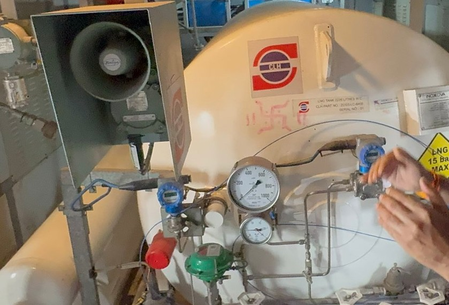
Each modified power car is fitted with an LNG tank capable of supporting long-distance operations. Trials are currently underway on the Mahesana–Sabarmati route, and officials said the technology is expected to be extended to eight to ten more trains after completion of mandatory tests and approvals from the Research Designs and Standards Organisation.
Railway authorities said the introduction of LNG-powered passenger trains is part of Indian Railways’ broader strategy to cut emissions, lower operating costs and modernise services through cleaner energy solutions.
With inputs from IANS




© Copyright
Reporter Post.All Rights Reserved |
Powered by: Aptilogic Software |
 |
Page rendered in 0.0086 seconds.
|
Page rendered in 0.0086 seconds.