Sun, October 18, 2026


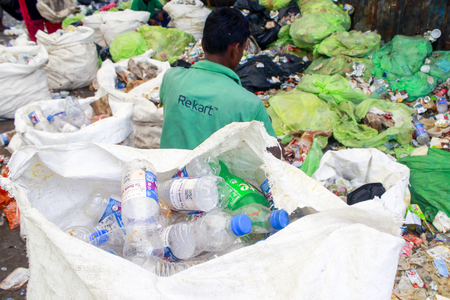
New Delhi: Emissions generated across the global plastics system—including greenhouse gases, air pollutants, and toxic chemicals released mainly during plastic production—could double health risks worldwide by 2040 if current practices continue unchanged, a new study has warned.
Published in The Lancet Planetary Health, the research highlights health damage occurring at every stage of the plastics life cycle, from fossil fuel extraction—used as feedstock for over 90 per cent of plastics—to manufacturing, disposal, and environmental leakage.
Using modelling techniques, the study assessed global human health impacts under multiple future scenarios of plastic consumption and waste management between 2016 and 2040.
Under a “business-as-usual” scenario, the study projects that by 2040, the adverse health effects of plastics could double. Greenhouse gas emissions and the resulting rise in global temperatures would account for 40 per cent of these harms. Air pollution, largely driven by plastic production processes, would contribute 32 per cent, while toxic chemical exposure across the plastics life cycle would make up 27 per cent.
Less than one per cent of the health impacts would stem from reduced water availability, ozone layer depletion, and increased exposure to ionising radiation, the researchers noted.
“We found that emissions across plastics life cycles contribute significantly to health burdens linked to global warming, air pollution, toxicity-related cancers, and non-communicable diseases, with the most severe impacts arising from primary plastic production and open burning,” said Megan Deeney of the London School.
According to the model, if no changes are made to policies, economic structures, infrastructure, materials, or consumer behaviour, annual health losses could more than double—from 2.1 million healthy life years lost in 2016 to 4.5 million by 2040.
Overall, the global plastics system could be responsible for reducing healthy population life by an estimated 83 million years between 2016 and 2040.
The study also found that improving waste collection and recycling alone would have limited impact. However, combining these measures with material substitution and reuse could significantly reduce health harms linked to plastic emissions.
“To meaningfully curb plastic emissions and protect public health, policymakers must impose stronger regulations and substantially cut the production of new plastics for non-essential uses,” the researchers concluded.
With inputs from IANS




© Copyright
Reporter Post.All Rights Reserved |
Powered by: Aptilogic Software |
 |
Page rendered in 0.0121 seconds.
|
Page rendered in 0.0121 seconds.