
Thu, October 15, 2026

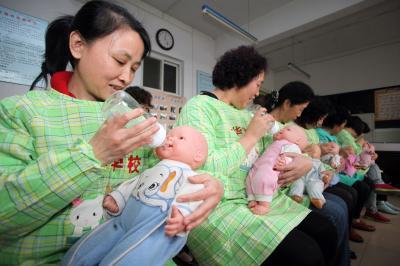
Beijing/New Delhi- Despite ending its strict one-child policy nearly a decade ago, China has failed to arrest its population decline, with demographic challenges continuing to deepen, according to a media report.
The one-child policy, formally introduced in 1980, was aimed at curbing China’s rapid population growth but significantly distorted the country’s demographic structure. Faced with mounting challenges such as an ageing population and shrinking workforce, the Chinese government officially scrapped the policy in 2016.
However, even after this landmark shift—and the introduction of multiple measures to encourage higher birth rates—China has not succeeded in boosting population growth, KSLTV quoted CNN as reporting.
China’s population has declined consecutively between 2022 and 2024. United Nations projections indicate that people aged over 60 now constitute more than 20 per cent of the country’s 1.4 billion population, a figure that could rise to nearly half by the year 2100.
President Xi Jinping has repeatedly underscored the importance of “population security” and declared the development of a “high-quality population” as a national priority. Yet analysts and citizens alike believe that stronger and more comprehensive policies are required to support marriages and childbirth, particularly those addressing high youth unemployment and the soaring cost of raising children.
“If we want to encourage people to have more children now, we need to put in the same—if not greater—level of effort and commitment,” said Welkin Lei, a 30-year-old resident of Beijing.
The legacy of the one-child policy has also left China grappling with a severe gender imbalance and a generation of only children who now shoulder the sole responsibility of caring for ageing parents, often in regions where social security systems remain inadequate.
In a renewed push to increase births, China has rolled out pro-natalist directives promoting marriage and childbirth among heterosexual couples as vital to the nation’s future. Measures include levying value-added tax on condoms and other contraceptives, along with incentives such as tax benefits, housing subsidies, cash handouts, and extended maternity leave.
However, experts remain sceptical. “So far, policies to boost births have been largely performative and have failed to address core issues such as the high cost of child-rearing and a weak social safety net,” said Yanzhong Huang, senior fellow for global health at the Council on Foreign Relations.
Observers warn that the economic consequences of a shrinking workforce, declining consumer base, and the escalating cost of caring for an ageing population could be profound for the world’s second-largest economy.
With inputs from IANS



© Copyright
Reporter Post.All Rights Reserved |
Powered by: Aptilogic Software |
 |
Page rendered in 0.013 seconds.
|
Page rendered in 0.013 seconds.