Wed, October 14, 2026

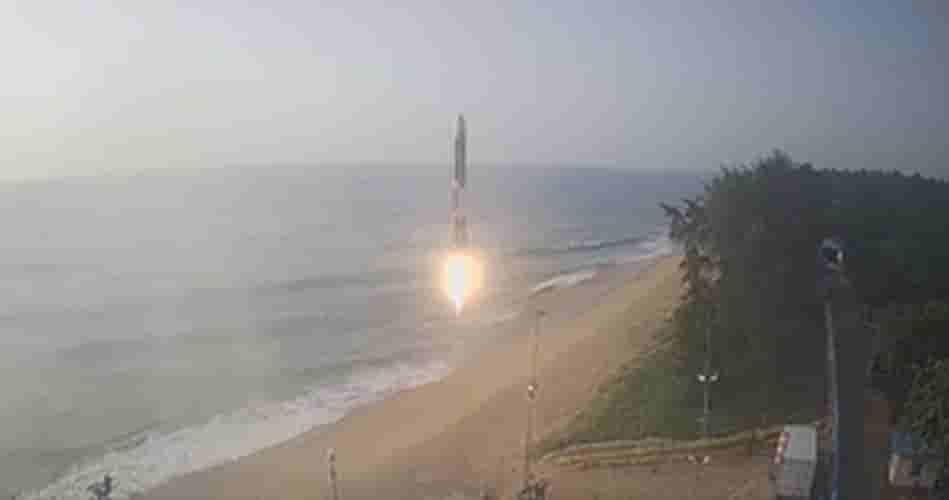
New Delhi: The Indian Space Research Organisation (ISRO) on Monday announced that it is fully prepared to launch the BlueBird Block-2 satellite on December 24 from the Satish Dhawan Space Centre.
The mission will deploy the BlueBird Block-2 satellite, also known as BlueBird-6, into Low Earth Orbit (LEO). The advanced communications satellite has been developed by US-based AST SpaceMobile and will be launched aboard India’s most powerful rocket, the LVM3.
Weighing approximately 6.5 tonnes, BlueBird Block-2 ranks among the heaviest commercial satellites ever launched. The satellite arrived in India from the United States on October 19 ahead of final launch preparations.
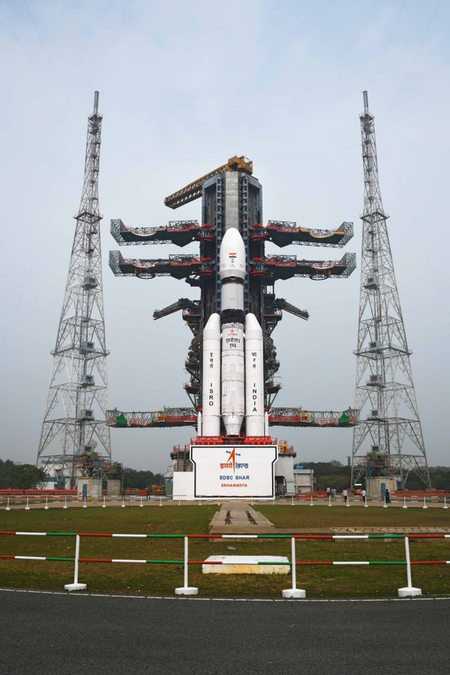
Introducing the mission on social media platform X, ISRO stated, “Meet #LVM3M6, ISRO’s operational heavy-lift launch vehicle with a proven record of reliable missions. Ready to deliver BlueBird Block-2 to Low Earth Orbit.”
Earlier, AST SpaceMobile highlighted the satellite’s capabilities, noting that once deployed, it will feature the largest commercial phased-array antenna in low Earth orbit, covering nearly 2,400 square feet. The company said the new satellite is 3.5 times larger than BlueBird satellites 1 to 5 and offers nearly 10 times higher data capacity.
This mission marks the second major collaboration between ISRO and US space agencies or companies. In July, ISRO successfully launched the $1.5 billion NASA-ISRO Synthetic Aperture Radar (NISAR) mission, designed to conduct high-resolution Earth observations capable of penetrating fog, dense clouds, and ice layers.
AST SpaceMobile has already placed five satellites — BlueBird 1 through 5 — into orbit in September 2024 and is expanding its global communications network in partnership with more than 50 mobile operators worldwide.
According to ISRO, the BlueBird-6 launch is being managed by its commercial arm, New Space India Limited (NSIL).
The LVM3 launch vehicle is a three-stage rocket consisting of two solid strap-on boosters (S200), a liquid core stage (L110), and a cryogenic upper stage (C25). ISRO said the rocket has a lift-off mass of 640 tonnes, stands 43.5 metres tall, and is capable of carrying payloads of up to 4,200 kg to Geosynchronous Transfer Orbit (GTO).
Earlier this year, on November 2, LVM3 successfully placed India’s heaviest satellite, CMS-3 weighing 4.4 tonnes, into orbit. The vehicle has also proven its reliability through missions such as Chandrayaan-2, Chandrayaan-3, and two OneWeb launches carrying a total of 72 satellites.
—With inputs from IANS



© Copyright
Reporter Post.All Rights Reserved |
Powered by: Aptilogic Software |
 |
Page rendered in 0.0122 seconds.
|
Page rendered in 0.0122 seconds.