Sun, October 11, 2026
Representational image, credit: IANS
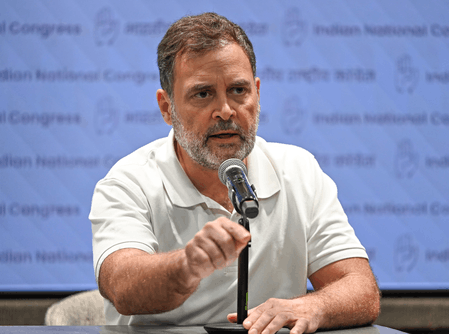
Congress President Rahul Gandhi on Friday said he did not agree with the claim that the Congress party was involved in the 1984 anti-Sikh riots, while describing the violence as a tragic and deeply painful episode.
Speaking at an event in the UK Parliament, Gandhi was asked about the riots in which nearly 3,000 Sikhs were killed, most of them in Delhi, following the assassination of then Prime Minister Indira Gandhi in 1984.
"I have no confusion in my mind about that. It was a tragedy, it was a painful experience. You say that the Congress party was involved in that, I don't agree with that. Certainly there was violence, certainly there was tragedy," Gandhi said.
The Congress leader was asked about the issue again during an interaction at the London School of Economics (LSE), where he was also questioned about former Prime Minister Manmohan Singh's earlier remarks on the 1984 violence.
Gandhi reiterated that he was completely opposed to violence and supported punishment for anyone responsible for it.
"When Manmohan Singh spoke, he spoke for all of us. As I said earlier, I am a victim of violence and I understand what it feels," he said.
"I am against any sort of violence against anybody on this planet. I get disturbed when I see anybody being hurt. So, I condemn that 100 per cent and I am 100 per cent for punishment for those involved in any violence against anybody. That's crystal clear," Gandhi added.
Gandhi also spoke about his own experiences with political violence, referring to the assassination of his father and former Prime Minister Rajiv Gandhi by an LTTE suicide bomber in 1991.
He said his personal experiences had given him a different understanding of the impact of violence and loss.
Gandhi recalled seeing the body of LTTE leader Velupillai Prabhakaran after he was killed in Sri Lanka and said he felt sympathy for him because he imagined the situation from the perspective of a father and his children.
He argued that people who have not personally experienced violence often fail to understand its consequences.
The 1984 riots remain one of the most controversial episodes in India's post-Independence history. The violence followed Indira Gandhi's assassination by two of her Sikh bodyguards on October 31, 1984, and led to widespread attacks on Sikh communities, particularly in Delhi.
Several Congress politicians and leaders, including Sajjan Kumar, have faced allegations of involvement in or incitement of the violence. Those accused have denied the allegations.
Gandhi's comments came during his visit to the UK, where he was engaging with students, academics, political figures and members of the Indian diaspora on issues ranging from Indian politics to his views on violence and democracy.



© Copyright
Reporter Post.All Rights Reserved |
Powered by: Aptilogic Software |
 |
Page rendered in 0.0125 seconds.
|
Page rendered in 0.0125 seconds.