Mon, October 12, 2026
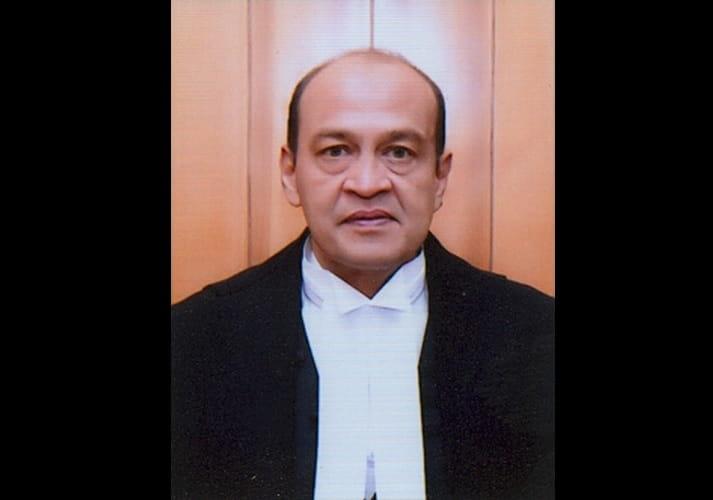
Photo: IANS
A three-member inquiry committee set up by Lok Sabha Speaker Om Birla has concluded that all three charges against former Delhi High Court judge Justice Yashwant Varma have been proved. The findings were presented in both Houses of Parliament on Wednesday, bringing a major development in the controversy over the discovery of a large quantity of unexplained cash at his official residence.
The inquiry, constituted under the Judges (Inquiry) Act, examined allegations arising from the recovery of burnt Rs 500 currency notes from a storeroom at Justice Varma's official residence at 30, Tughlaq Crescent, New Delhi. The cash was discovered after a fire broke out at the premises during the intervening night of March 14 and 15, 2025, when Varma was serving on the Delhi High Court.
In its findings, the committee held that the allegations relating to the unexplained cash, the handling and disturbance of evidence, and Justice Varma's explanation regarding the incident had all been established. The panel said he failed to give a satisfactory explanation regarding the presence, ownership or source of the money found in the storeroom.
The committee also expressed concern over the manner in which the scene was handled after the fire. It noted that important material evidence was not properly secured or preserved and that the condition of the storeroom was disturbed before it could be formally sealed and examined. The panel treated this as an important factor while assessing the circumstances surrounding the cash discovery.
Justice Varma's defence was also closely examined. According to the report, his response lacked the candour, transparency and institutional responsibility expected from a judge of a constitutional court. The committee found his explanation evasive and unsatisfactory when compared with statements from independent official witnesses and other supporting material.
The former judge had suggested several possibilities to explain the presence of the cash, including the possibility that the money had been planted or that there was a conspiracy involving other individuals. However, the committee said no evidence was produced to support these claims.
The panel also examined Justice Varma's interaction with members of his staff at around 2 a.m. following the fire. It noted that he had not adequately disclosed the nature of the conversation or any instructions that may have been given during the interaction. The relevant staff members were also not produced as defence witnesses to clarify what had transpired.
Another factor considered by the committee was the absence of any FIR or formal complaint alleging that the cash had been planted or that evidence had been tampered with. The panel also took into account the failure to present relevant staff members as defence witnesses while assessing Justice Varma's version of events.
The latest findings follow an earlier in-house inquiry ordered by then Chief Justice of India Sanjiv Khanna. That inquiry had concluded that Justice Varma had "active or tacit control" over the storeroom where the cash was discovered, further intensifying the allegations against him.
Amid the controversy, Justice Varma was repatriated to his parent court, the Allahabad High Court. In July 2025, more than 200 MPs signed a motion seeking his removal. The following month, Speaker Om Birla constituted the three-member Judges Inquiry Committee to formally examine the allegations.
The committee submitted its report to the Speaker in May. It has now been placed before Parliament in two volumes containing the oral and documentary evidence gathered during the inquiry.
Justice Varma has since resigned, effectively bringing the parliamentary removal process to an end. However, his resignation has reportedly not yet been formally notified by the Law Ministry.
Despite this, the inquiry report remains significant. It represents the findings of a statutory parliamentary inquiry and formally records the committee's conclusion that all three charges were proved. Beyond the immediate controversy, the case has raised broader questions about judicial accountability, the standards expected of constitutional court judges and the importance of preserving evidence in matters involving allegations against members of the higher judiciary.


© Copyright
Reporter Post.All Rights Reserved |
Powered by: Aptilogic Software |
 |
Page rendered in 0.0129 seconds.
|
Page rendered in 0.0129 seconds.