Fri, October 23, 2026
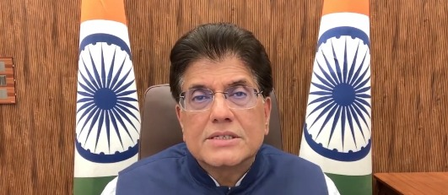
Union Commerce Minister Piyush Goyal on Saturday rejected Opposition criticism that the interim trade agreement between India and the United States undermines domestic interests, asserting that the pact was negotiated from a position of economic strength and safeguards key self-reliant sectors.
Addressing a press conference in Mumbai, Goyal described the agreement as “fair and balanced,” emphasising that it seeks to balance consumer benefits with export-led growth while preserving national sovereignty. He clarified that India’s plan to purchase goods worth $500 billion from the US over the next five years — including energy, aircraft, and technology — is an intent based on commercial requirements rather than a binding commitment.
The minister highlighted that reciprocal tariffs on Indian exports to the US have been reduced from 50 per cent to 18 per cent, providing India a competitive edge over rivals such as China, Bangladesh, and Vietnam. He added that several important Indian sectors would now benefit from zero-duty access.
Goyal also stressed that sensitive agricultural products — including rice, wheat, corn, millets, and dairy — have been excluded from the agreement to protect domestic farmers. He noted that India has not offered any duty concessions for US exports of dairy, poultry, meat, wheat, rice, maize, or soy. Instead, limited market access has been granted for select products that India requires or does not produce in surplus, such as walnuts, pistachios, and certain wines, subject to minimum import price conditions.
The minister projected strong growth prospects for India’s cotton and textile sector, stating that the deal introduces a “yarn forward” provision, enabling Indian garments to enter the US market at zero duty if they use specified yarn inputs.
Goyal further said that India is expected to import nearly $100 billion worth of aircraft, engines, and spare parts from Boeing over the next five years. He noted that increased aviation capacity would improve connectivity to remote regions and could help reduce airfares for passengers.
Referring to the Union Budget 2026–27, Goyal described it as a roadmap for transforming India into a developed nation by 2047. He said the budget focuses on economic growth, self-reliance, and infrastructure expansion, with the aim of reducing logistics costs and strengthening manufacturing. He added that the vision reflects a commitment to inclusive development centred on citizen welfare.
With inputs from IANS



© Copyright
Reporter Post.All Rights Reserved |
Powered by: Aptilogic Software |
 |
Page rendered in 0.0095 seconds.
|
Page rendered in 0.0095 seconds.