Wed, October 21, 2026

By Nityanand Shukla
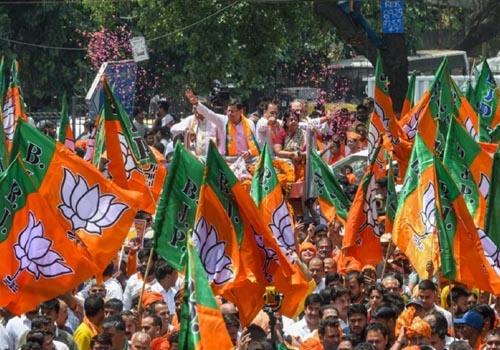
Ranchi: Is a new political equation emerging within BJP. If the recent developments are any indication BJP is now passing through in new era of social engineering. Prime Minister Narendra Modi
The Bharatiya Janata Party (BJP) has long been associated with Hindutva politics and cultural nationalism. From the Ram temple movement of the 1990s to its dominant victories in 2014 and 2019, the party built a strong ideological identity rooted in what many observers called “Kamandal politics.” However, after the 2024 Lok Sabha elections, a noticeable shift in political messaging has sparked debate over whether the BJP is now combining Hindutva with Mandal-style caste outreach — particularly among OBC, SC, and ST voters.
The implementation of the Mandal Commission recommendations in the early 1990s reshaped India’s political landscape by expanding reservations for Other Backward Classes (OBCs). At the same time, the BJP mobilized around religious identity through the Ram Janmabhoomi movement, creating a counter-narrative to caste-based politics. Leaders like L.K. Advani helped the party rise as the principal opposition force in 1991 and eventually to power in 1998 and 1999.
The Modi Era and Social Engineering
When Narendra Modi became Prime Minister in 2014, the BJP introduced a hybrid political model combining Hindutva, welfare governance, and aspirational politics. Modi’s OBC background allowed the party to expand its outreach among non-dominant backward communities. Over the last decade, the BJP has attempted to consolidate a broader social coalition by appealing to OBC, SC, and economically weaker groups alongside its traditional upper-caste base.
UGC Guidelines, Caste Debate, and New Political Signals
Recent debates surrounding UGC guidelines and questions of social representation have intensified discussions about caste dynamics in Indian politics. Some state-level leaders have emphasized OBC identity and social justice issues more strongly, leading to speculation that the BJP is recalibrating its strategy. In Madhya Pradesh, Chief Minister Mohan Yadav is widely perceived by observers as focusing on OBC-centric political outreach, reflecting a Mandal-style approach within the party’s broader framework.
Diverging State Narratives: Hindutva vs OBC Politics
Within the BJP, different leaders appear to be emphasizing different political themes. Uttar Pradesh Chief Minister Yogi Adityanath and Assam Chief Minister Himanta Biswa Sarma are often viewed as representing a more assertive Hindutva narrative. Their political messaging frequently revolves around cultural nationalism and strong ideological positioning. In contrast, Mohan Yadav’s leadership in Madhya Pradesh is seen by some analysts as prioritizing OBC representation and caste-based political consolidation.
Disenchantment Among General Category Voters?
One emerging debate after the 2024 elections revolves around the perception that some general-category voters may feel politically sidelined as caste-based discussions gain prominence. At the same time, SC, ST, and OBC voters appear increasingly central to electoral strategies across parties. This has created a delicate balancing act for the BJP — maintaining its traditional upper-caste support base while expanding its appeal among backward communities.
Caste Census and Electoral Calculations
The broader conversation around caste census and representation has also influenced political discourse. While the BJP historically emphasized a pan-Hindu identity that transcended caste divisions, changing electoral realities have made caste data and representation an unavoidable part of policy debates. Supporters argue that this reflects political pragmatism, while critics see it as a shift away from earlier ideological positioning.
Conclusion: A New Political Synthesis?
Rather than abandoning Hindutva, the BJP’s current trajectory may indicate an attempt to merge Mandal and Kamandal — combining ideological politics with caste outreach and welfare governance. The party’s future may depend on how effectively it manages competing expectations: reassuring upper-caste voters, consolidating OBC and marginalized communities, and maintaining its ideological core. As India’s political landscape evolves, the BJP’s strategy appears to be moving toward a more layered and adaptive model, reflecting both electoral realities and changing social dynamics.


© Copyright
Reporter Post.All Rights Reserved |
Powered by: Aptilogic Software |
 |
Page rendered in 0.0102 seconds.
|
Page rendered in 0.0102 seconds.