Thu, October 22, 2026

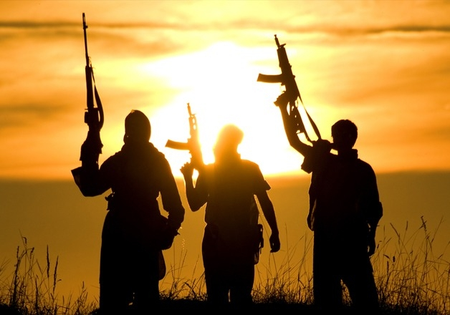
New Delhi: Indian intelligence agencies have flagged the alleged involvement of the ISI’s Dhaka Cell in the large-scale violence that erupted in Bangladesh earlier this week, raising concerns over a broader plot aimed at destabilising eastern and northeastern India.
The Dhaka Cell is a specialised unit reportedly set up by Pakistan’s Inter-Services Intelligence (ISI) within the Pakistan High Commission in Dhaka. While its immediate role involves grooming terrorists and radical elements in Bangladesh, officials say its larger and long-term objective is India-centric.
According to Intelligence Bureau (IB) sources, the Dhaka Cell is not a routine intelligence unit. It was established a few months ago following a visit to Dhaka by Pakistan’s Chairman of the Joint Chiefs of Staff Committee, General Sahir Shamshad Mirza. Since then, the cell has allegedly been planning widespread unrest in Bangladesh.
Indian agencies believe that the recent violence following the staged killing of student leader Sharif Osman Hadi was orchestrated by this Dhaka Cell. Officials claim the unit had been waiting for the right moment to trigger large-scale disturbances, activating its plan once it became clear that Bangladesh’s general elections would be held in February 2026.
The Dhaka Cell is said to be modelled on a similar ISI unit that previously operated from the Pakistan High Commission in Sri Lanka. That unit had allegedly worked to establish terror modules in South India and had initiated reconnaissance operations in cities such as Chennai. The module was eventually dismantled by India’s National Investigation Agency (NIA) in 2014.
Sources say the Bangladesh-based cell includes senior officers from the Pakistan armed forces, including a brigadier, a colonel, and four majors, along with personnel from the Pakistan Air Force and Navy. An official described the unit as part of a long-pending strategic plan of Pakistan’s military establishment.
Following the ouster of former Prime Minister Sheikh Hasina and the installation of the Muhammad Yunus-led caretaker government, the ISI is believed to have intensified its efforts to reshape Bangladesh’s political and security landscape. Intelligence officials and regional experts suggest that Pakistan has not reconciled with its defeat in the 1971 Liberation War, which led to the creation of Bangladesh with decisive support from India.
Despite repeated failures in the past, Islamabad allegedly saw an opportunity after Sheikh Hasina’s removal, which Indian officials say cleared a major obstacle to ISI influence in Bangladesh. While the ISI is believed to have played a role in the student-led uprising last August, its activities reportedly escalated after Hasina fled the country.
According to IB officials, the Dhaka Cell is preparing for a prolonged campaign. Its immediate objective is to create sustained instability in Bangladesh by ensuring a Jamaat-e-Islami victory in the upcoming elections or, failing that, delaying the polls altogether.
However, officials emphasise that the ISI’s broader goal is India. The agency is reportedly seeking to establish strong terror networks in West Bengal and the Northeastern states by exploiting unrest in Bangladesh and placing pressure on India’s border security apparatus to facilitate infiltration.
The Dhaka Cell is expected to intensify its activities in the coming months, particularly in the run-up to the West Bengal Assembly elections scheduled for March–April next year. Intelligence inputs suggest a strategy of recurring violence in Bangladesh, combined with increased infiltration attempts along the India-Bangladesh border.
Indian security agencies have stated that they are closely monitoring developments and are prepared to counter any emerging threats. “The challenge ahead is significant, but we are fully capable of handling the situation,” an official said.
With inputs from IANS



© Copyright
Reporter Post.All Rights Reserved |
Powered by: Aptilogic Software |
 |
Page rendered in 0.0102 seconds.
|
Page rendered in 0.0102 seconds.