Wed, October 21, 2026


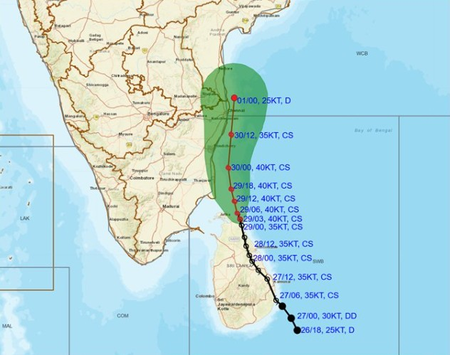
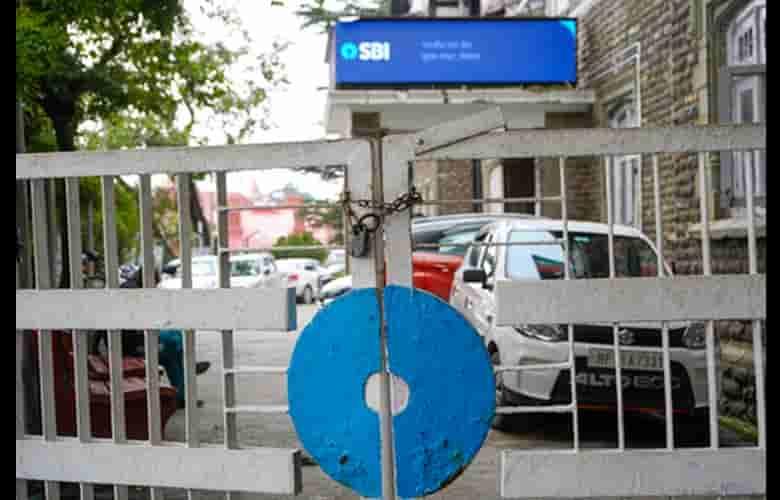
Chennai: Cyclone Ditwah swept through Tamil Nadu’s Ramanathapuram coast on Saturday, bringing high tides, strong winds, and steady rain that severely disrupted daily life, halted transport services, damaged fishing equipment, and forced the evacuation of coastal residents.
With wind speeds reaching 65–70 kmph, Southern Railway suspended all train operations on the Pamban sea bridge as a safety precaution. Trains from Chennai, Kanyakumari, and Madurai heading to Rameswaram were stopped at Mandapam, where government buses transported passengers to the island. Trains originating from Rameswaram will also begin their journeys from Mandapam until conditions improve.
Railway officials said services across the sea bridge would resume only when wind speeds fall to safe levels.
Meanwhile, powerful winds and continuous rain lashed Rameswaram, Mandapam, and Pamban. Fishermen struggled to protect their boats from rough seas. The district recorded an average of 2 cm rainfall by Friday afternoon. In Rameswaram harbour, a mechanised boat broke free from its anchor and drifted ashore at Serankottai due to the turbulent waters. Coastal erosion intensified in vulnerable areas, pulling several country boats into the sea, forcing fishermen to retrieve and secure them despite the hazardous weather.
District Collector Simranjeet Singh Kahlon, who monitored preparedness across fishing hamlets, said that while rainfall was moderate, strong winds posed significant risks. “Coastal areas are experiencing winds of 50–70 kmph. As a precaution, around 40 residents from the Dhanushkodi fishing settlement have been shifted to a government school in Rameswaram,” he said. Evacuations will expand if sea levels surge or rainfall increases, he added.
Authorities have also suspended tourist access to Dhanushkodi until further notice. Police set up barricades on Pudu Road and turned away visitors attempting to reach the tip of the island.
As Cyclone Ditwah continues moving northward over the Bay of Bengal, the district administration remains on high alert, closely monitoring sea conditions, vulnerable communities, and transport routes to ensure public safety.
With inputs from IANS




© Copyright
Reporter Post.All Rights Reserved |
Powered by: Aptilogic Software |
 |
Page rendered in 0.0102 seconds.
|
Page rendered in 0.0102 seconds.