Mon, October 12, 2026

Representational Pic
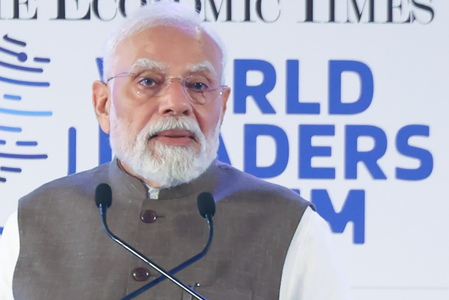
Prime Minister Narendra Modi on Monday inaugurated Pakyong Airport, Sikkim's first airport, marking a major milestone for the northeastern state and describing the expansion of air connectivity as part of a broader effort to bring the region closer to the rest of India.
Addressing a gathering after dedicating the airport to the nation, Modi said the inauguration was significant not only for Sikkim but for the country's aviation sector as well. He noted that Pakyong had become India's 100th airport.
Modi used the occasion to contrast the pace of airport development under his government with that of previous administrations. He said India had 65 airports at the time of Independence-era development up to 2014, while 35 new airports had been dedicated to the nation during the previous four years of his government.
According to the Prime Minister, the expansion represented a shift from developing less than one airport a year on average over the earlier period to roughly nine airports annually during the four years of his government's tenure.
He said improved connectivity was particularly important for the Northeast, where geographical challenges have historically made travel and movement more difficult. The new airport, he said, would reduce the distance between Sikkim and other parts of the country and help accelerate the state's development.
Pakyong Airport is located around 4,500 feet above sea level and is expected to provide a major boost to tourism and business in Sikkim. Until its opening, the nearest operational airport serving the state was Bagdogra in neighbouring West Bengal, around 150 km away.
The airport also has strategic significance because it is located roughly 60 km from the India-China border. Improved air connectivity in the border region can strengthen accessibility for residents, tourists and businesses while adding to the area's strategic infrastructure.
Pakyong is part of the government's UDAN (Ude Desh ka Aam Naagrik) regional connectivity programme, which aims to make air travel more affordable and connect smaller and remote cities and towns with the wider aviation network.
Modi said his government was pursuing both physical and “emotional connectivity” with the northeastern states. He recalled making several visits to the region to review development projects and said Union ministers had been visiting the Northeast regularly to monitor government programmes.
He said the impact of improved infrastructure could now be seen across states including Assam, Arunachal Pradesh, Meghalaya, Manipur, Nagaland, Tripura and Sikkim.
Highlighting the wider infrastructure push, Modi pointed to the arrival of air services in previously unconnected areas, the expansion of rail links, improved electricity access, widening of highways, construction of rural roads and bridges, and the expansion of digital services.
For Sikkim, the airport represents more than a new transport facility. Faster access to the state is expected to support tourism, improve business connectivity and make travel easier for residents who previously had to rely heavily on the long road journey from Bagdogra.
The inauguration therefore marked an important step in integrating Sikkim more closely with India's national transport network while supporting the government's larger objective of improving connectivity across the Northeast.



© Copyright
Reporter Post.All Rights Reserved |
Powered by: Aptilogic Software |
 |
Page rendered in 0.012 seconds.
|
Page rendered in 0.012 seconds.