Mon, October 12, 2026

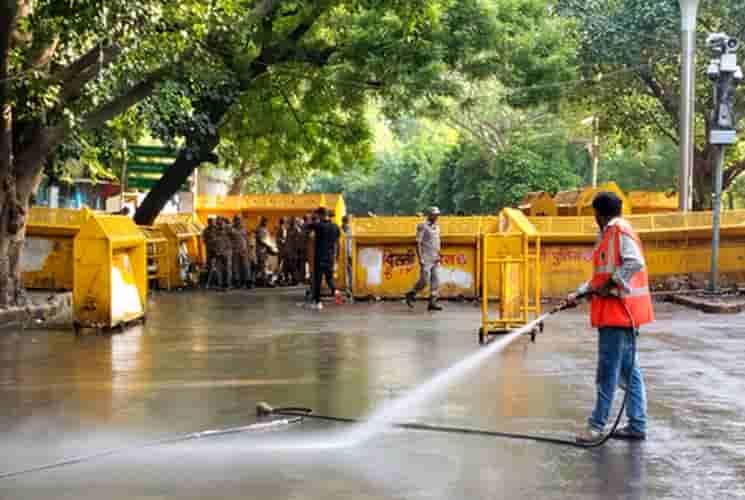
Representational Pic
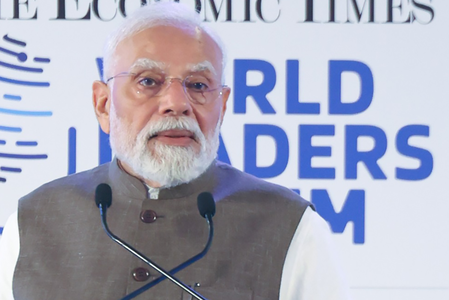
Prime Minister Narendra Modi on Thursday said India was on course to double the size of its economy to $5 trillion by 2022, with manufacturing and agriculture expected to contribute $1 trillion each to the target.
Addressing the foundation stone-laying ceremony of the India International Convention and Expo Centre in New Delhi, Modi said the Centre and state governments were working together to achieve the ambitious economic goal.
He said the government was focusing on strengthening India's macroeconomic fundamentals and increasing the country's export contribution to 40 per cent of GDP.
“The country's macroeconomic fundamentals are strong, and all efforts are being made by various agencies to increase the share of exports to 40 per cent of the GDP,” the Prime Minister said.
Modi said the $5 trillion target would require substantial contributions from key sectors of the economy. He identified manufacturing and agriculture as two major pillars, with each expected to account for $1 trillion of the overall economy.
The Prime Minister also highlighted the role of state governments in driving economic growth. He said states were competing with one another to improve their business environment, particularly through better rankings on the ease of doing business.
According to Modi, India's strong economic growth in recent years had also contributed to employment generation, with sectors such as information technology, retail and tourism emerging as important sources of jobs.
His comments came amid the government's efforts to attract investment, expand manufacturing capacity and improve infrastructure. The proposed $5 trillion economy target was also expected to depend heavily on India's ability to increase productivity, strengthen exports and create more employment opportunities.
Modi also defended the government's decision to consolidate public sector banks. Referring to the recently announced merger of Dena Bank, Vijaya Bank and Bank of Baroda, he said the move would create the country's third-largest banking entity.
He said the issue of reducing the number of government-owned banks had been discussed for years, but his government had taken the decision to act on it.
“The need for having dozens of government-run banks was being debated for a long time but we have acted on it. This government will not shy away from taking tough decisions in the national interest,” Modi said.
He cited the implementation of the Goods and Services Tax (GST) as another example of a major policy decision taken by his government despite the challenges involved.
The Prime Minister's remarks reflected the government's broader economic strategy of combining structural reforms, infrastructure development, stronger exports and consolidation in the financial sector to support India's long-term growth ambitions.



© Copyright
Reporter Post.All Rights Reserved |
Powered by: Aptilogic Software |
 |
Page rendered in 0.0141 seconds.
|
Page rendered in 0.0141 seconds.