Tue, October 13, 2026
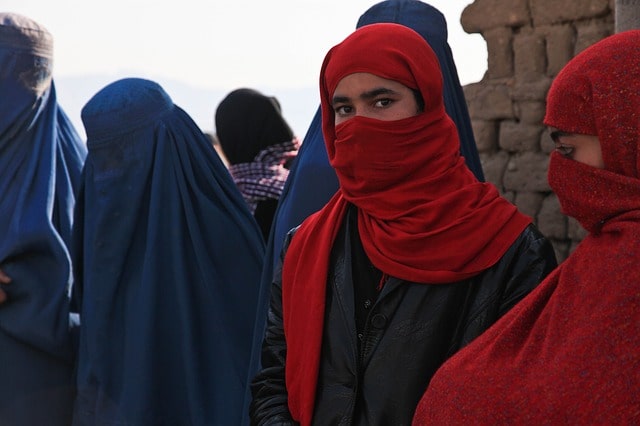
Representational Pic
The Union Cabinet on Wednesday approved an ordinance making the practice of instant triple talaq a criminal offence, with the government citing the “compelling necessity” and “overpowering urgency” to protect Muslim women from the practice.
The ordinance will now be sent to the President for approval. The decision came after the government failed to secure passage of the Muslim Women (Protection of Rights on Marriage) Bill in the Rajya Sabha during the previous Monsoon Session of Parliament.
The government had earlier made changes to the proposed legislation in an attempt to address opposition concerns. Under the revised provisions, only the woman affected by instant triple talaq or her blood relatives could lodge a complaint against the husband. However, the bill still failed to clear the Upper House.
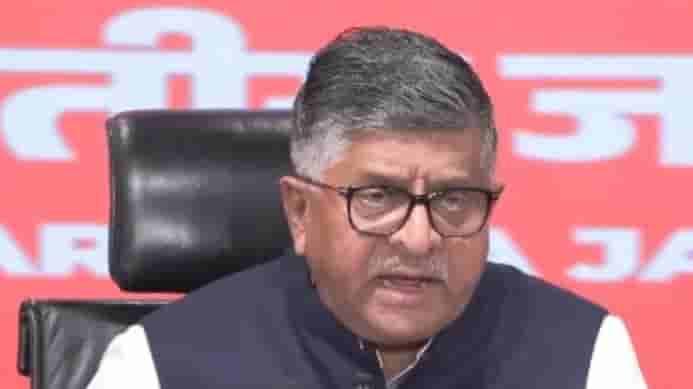
Briefing the media after the Cabinet meeting, Union Law Minister Ravi Shankar Prasad said reports of instant triple talaq had continued despite the Supreme Court declaring the practice unconstitutional and the Lok Sabha passing legislation against it.
Prasad accused the Congress of blocking the bill in the Rajya Sabha for political reasons and said the issue should be viewed as one of gender justice rather than religion.
“The issue of triple talaq has nothing to do with faith, mode of worship. It is pure issue of gender justice and gender equality,” he said.
According to Prasad, cases of instant triple talaq continued to be reported on trivial grounds, including disputes over household matters. He also claimed that some women had been divorced through messages sent on social media platforms such as WhatsApp.
The minister said the government had collected details of 430 cases reported between January 2017 and September 2018 across several states. Of these, 229 cases were reported before the Supreme Court judgment and another 201 after the verdict. He added that the actual number could be considerably higher because many cases may have gone unreported.
“The bottom line is that cases of triple talaq continue unabated. Whatever we have collected is shocking,” Prasad said.
The ordinance provides for the offence to be cognizable, with a maximum punishment of three years in prison. A complaint can be filed by the woman affected or by her blood relatives.
At the same time, the government has included provisions intended to prevent the law from unnecessarily disrupting families. A compromise can be reached at the initiative of the woman, subject to conditions imposed by the magistrate. Bail can also be granted by a magistrate after hearing the woman who filed the complaint.
Prasad said the woman would be entitled to maintenance for herself and her minor children, while custody of minor children would remain with the mother.
“The purpose was not to break families,” the minister said, stressing that any settlement would require the approval of the court.
The government’s move follows the Supreme Court's landmark 2017 judgment that invalidated instant triple talaq, putting the practice at the centre of a wider debate over women's rights, personal law and gender equality.
Prasad also pointed out that several Muslim-majority countries had already restricted or prohibited instant triple talaq and argued that the practice should not continue in India.
With Assembly elections approaching in five states, the decision was also expected to intensify the political debate over the issue. The government, however, maintained that the legislation was being pursued primarily to address the rights and security of Muslim women rather than as an electoral issue.
Prasad appealed to Congress leader Sonia Gandhi, BSP chief Mayawati and West Bengal Chief Minister Mamata Banerjee to support the legislation in Parliament and rise above political considerations.
He said the Congress had supported the bill in the Lok Sabha but opposed it in the Rajya Sabha. The government, he added, had made efforts to build consensus, including through Parliamentary Affairs Minister Ananth Kumar, who had met Congress leaders at Prime Minister Narendra Modi’s direction.
Prasad also rejected the idea of reducing the issue to the political empowerment of Muslim women, including through electoral representation.
“We are consciously keeping this bill away from political divide. It is for gender justice,” he said.


© Copyright
Reporter Post.All Rights Reserved |
Powered by: Aptilogic Software |
 |
Page rendered in 0.0166 seconds.
|
Page rendered in 0.0166 seconds.