
Sun, November 29, 2026
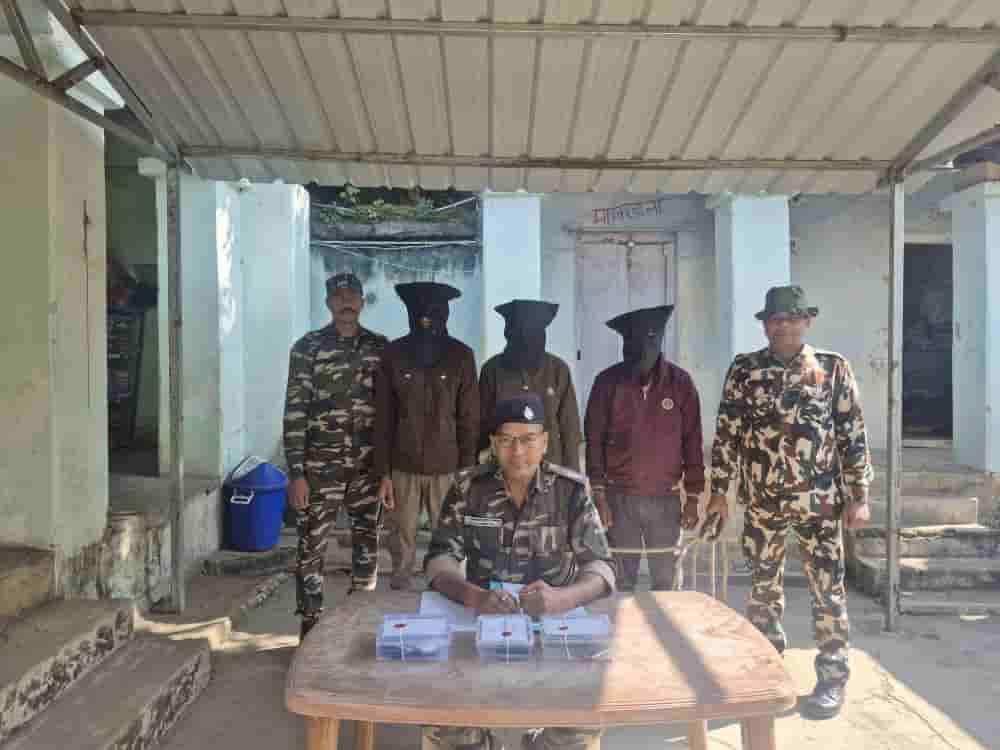
Photo: RP
Deoghar: Police have arrested three alleged cybercriminals in Deoghar district for reportedly duping people through fake APK files disguised as applications related to government services, electricity bills and traffic challans. Five mobile phones and six SIM cards have been seized from their possession.
Acting on the instructions of Superintendent of Police Praveen Pushkar, a police team conducted a raid on November 28 in the Sonaraithari police station area following a confidential tip-off about suspected cyber fraud activities.
The operation was carried out under the leadership of Deputy Superintendent of Police Kailash Prasad Mahto.
According to police, the accused allegedly circulated fraudulent APK files in the name of the PM-KISAN Yojana, electricity bill payments and RTO traffic challans. Once victims downloaded and installed these applications, the accused allegedly gained remote access to their mobile phones and used it to carry out financial fraud.
The arrested individuals have been identified as Sarafat Ansari (30), a resident of Dumaria village under Sonaraithari police station, and Rajan Kumar Das (28) and Rahul Kumar Das (19), both residents of Nai Chihutiya village under Margomunda police station.
Police said a preliminary examination of the seized mobile phones and SIM cards indicated the involvement of the accused in cyber fraud activities.
The investigation also revealed that Rajan Kumar Das had previously been arrested in connection with Deoghar Cyber Police Station Case No. 111/2025, registered on August 9, 2025.
The raid was conducted by Sonaraithari Station House Officer Rohit Kumar Dangi, Inspector Nagendra Kumar Mandal of Deoghar Cyber Police Station and other police personnel.
Police are investigating the case further to establish the extent of the alleged fraud and identify possible victims.
The case also highlights the growing misuse of fake mobile applications to target unsuspecting users. Cybersecurity experts routinely advise people against installing APK files received through unsolicited WhatsApp messages, SMS links or unknown sources, particularly those claiming to offer government services or payment facilities.



© Copyright
Reporter Post.All Rights Reserved |
Powered by: Aptilogic Software |
 |
Page rendered in 0.0086 seconds.