Wed, November 25, 2026

On November 26, 1949, after 2 years, 11 months and 17 days of deliberations, Dr. B.R. Ambedkar, Chairman of the Drafting Committee, presented the handwritten original Constitution, comprising 251 pages, to Constituent Assembly President Dr. Rajendra Prasad. Its defining words, "We, the People of India", marked the beginning of a new chapter in the country's history. The Constitution came into force on January 26, 1950, giving independent India a framework to govern itself and pursue its development through democratic institutions.
The Constitution incorporated several important provisions to ensure social and economic justice, including reservations for Dalits and tribal communities to help historically disadvantaged sections become part of the national mainstream. The first general elections in 1952 further strengthened the country's democratic foundations by establishing an elected government at the Centre and in the states.
However, the making and implementation of laws depend not only on policies but also on the intentions behind them. During its more than six decades in power, the Congress party's approach to governance revealed, in my view, a clear contradiction between its stated policies and intentions.
The Congress leadership, I believe, failed to establish a meaningful connection with India's cultural consciousness. Through more than 75 constitutional amendments during its tenure, the party repeatedly undermined the country's foundational values. Its acceptance of Partition, its approach to national identity and its reluctance to promote the complete singing of Vande Mataram reflect, in my assessment, its disconnect with India's civilisational heritage.
Despite the depiction of Lord Ram and Mata Sita in the original Constitution, Congress leaders have also faced criticism over their stand on the existence of Lord Ram. The party's present-day invocation of the Constitution, therefore, raises questions about the consistency of its political position.
Several examples illustrate what I consider Congress's disregard for the Constitution's original spirit. Article 370, which gave Jammu and Kashmir a special constitutional status, was introduced despite Dr. Ambedkar's opposition, I believe. Its consequences, according to this view, extended beyond separatism and terrorism, with tribal and Dalit communities in Jammu and Kashmir remaining deprived of reservation benefits for decades. Even educated members of these communities were forced to continue manual scavenging.
The first constitutional amendment, introduced by then Prime Minister Jawaharlal Nehru, also placed restrictions on the freedom of expression guaranteed under Article 19.
Indira Gandhi went further. The 24th Constitutional Amendment enabled Parliament to amend Fundamental Rights, while the 25th Amendment restricted property rights and curtailed judicial review, weakening citizens' constitutional protections.
The Emergency imposed by Indira Gandhi was an attempt to undermine democracy. The 42nd Constitutional Amendment, enacted during that period, altered the Preamble by inserting the words 'Socialist' and 'Secular' and the expression 'unity and integrity of the Nation'. Fundamental Rights were suspended, political freedoms curtailed and press censorship imposed. Thousands of Opposition leaders were jailed, while state machinery was misused to suppress dissent.
The Congress must explain what concrete steps it took to uphold the values of socialism, secularism and national integrity that were incorporated into the Preamble. Its handling of the Shah Bano case, despite the Supreme Court's ruling in favour of the victim, raises serious questions about its commitment to justice.
Similarly, statements by Congress leaders on the rights of communities over the country's resources, the promotion of narratives such as 'saffron terrorism', and the party's approach towards Dalits, tribals and backward communities deserve scrutiny.
The Congress frequently invokes Dr. Ambedkar's legacy, but its record on recognising his contribution remains questionable. Its approach towards tribal communities, including its opposition to the candidature of a tribal woman for the country's highest constitutional office and its conduct after she became President, also raises questions about its commitment to tribal interests.
The party must also answer for its failure to implement the Mandal Commission recommendations and grant constitutional status to the Backward Classes Commission during its tenure. Its opposition to the Women's Reservation Bill in Parliament, in my view, further exposed its position on women's political representation.
A party that accepted Partition and, during its long years in power, failed to prevent the growth of terrorism, extremism and separatism cannot claim an exclusive commitment to national unity and integrity. Its support for illegal infiltrators in the context of electoral roll revision, and its differing positions on Electronic Voting Machines depending on election results, also reflect what I consider its contradictory politics.
The people have repeatedly rejected the Congress, and its political relevance is declining across the country.
The people of India have entrusted the BJP with the responsibility of shaping the country's future in the 21st century. From the Bharatiya Jana Sangh to the BJP, the party's political journey has been rooted in its commitment to India and its cultural identity. There is no contradiction between its policies and intentions. Its guiding principle is 'Sabka Saath, Sabka Vikas', in place of appeasement politics.
Article 370 has become history, strengthening national integration. Dr. Ambedkar was honoured with the Bharat Ratna, and five important sites associated with his life and work were developed as Panch Teerth. A tribal woman now occupies the country's highest constitutional office. The BJP also played an important role in implementing the Mandal Commission recommendations.
The Modi government has taken several constitutional steps to strengthen social justice and representation. The 102nd Constitutional Amendment granted constitutional status to the National Commission for Backward Classes, while the 103rd Amendment introduced 10 per cent reservation for Economically Weaker Sections.
The 104th Amendment extended the reservation of seats for Scheduled Castes and Scheduled Tribes in the Lok Sabha and state legislative assemblies until 2030. The 105th Amendment restored the power of states to maintain their own lists of Other Backward Classes, while the 106th Amendment provided for 33 per cent reservation for women in the Lok Sabha and state legislative assemblies.
The construction of the grand Ram Temple under the Modi government has also strengthened cultural nationalism, while the promotion of the complete singing of Vande Mataram has helped revive cultural consciousness.
On Constitution Day, it is important to reflect on how political parties have treated the spirit, dignity and democratic values of the Indian Constitution.
In 2015, on the occasion of Dr. Ambedkar's 125th birth anniversary, Prime Minister Narendra Modi announced that November 26 would be observed every year as Constitution Day. This was not merely the declaration of a commemorative day. It was an important initiative to recognise the contribution of the architect of the Constitution and bring constitutional values into the national consciousness.
Today, the country and the world can see how the BJP government is working to strengthen India's constitutional framework.
At the same time, Constitution Day offers an opportunity to recall how the Congress repeatedly undermined constitutional institutions and democratic freedoms. The Emergency of 1975 remains one of the darkest chapters in India's democratic history. The restrictions imposed on civil liberties, freedom of expression and the independence of constitutional institutions during that period must never be forgotten.
There is a need to understand Dr. Ambedkar's ideas in their entirety rather than interpret his legacy according to political convenience. His vision of India was founded on social justice, equality, fraternity and national unity. The Constitution is not the property of any political party, family or government; it is the collective heritage of 140 crore Indians.
The Constitution's ideals are increasingly being translated into action, and its underlying aspirations are being realised. On this occasion, it is also important to remember Dr. Ambedkar's opposition to reservation on religious grounds, his criticism of appeasement politics and his support for a Uniform Civil Code. A UCC, I believe, can help ensure equality among all communities, and the Modi government has already taken steps in this direction.
Let us resolve on Constitution Day to uphold the Constitution's fundamental spirit, respect democratic institutions, remain committed to social justice and rise above discrimination and appeasement. Together, we must contribute to building an equal, harmonious and strong India.
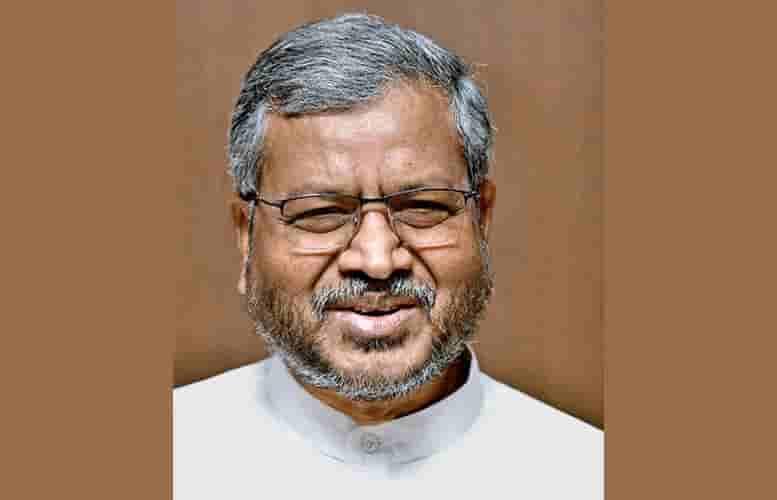
(The author is former Chief Minister of Jharkhand and currently the Leader of the Opposition in the state Assembly.)



© Copyright
Reporter Post.All Rights Reserved |
Powered by: Aptilogic Software |
 |
Page rendered in 0.0109 seconds.