Sun, October 11, 2026

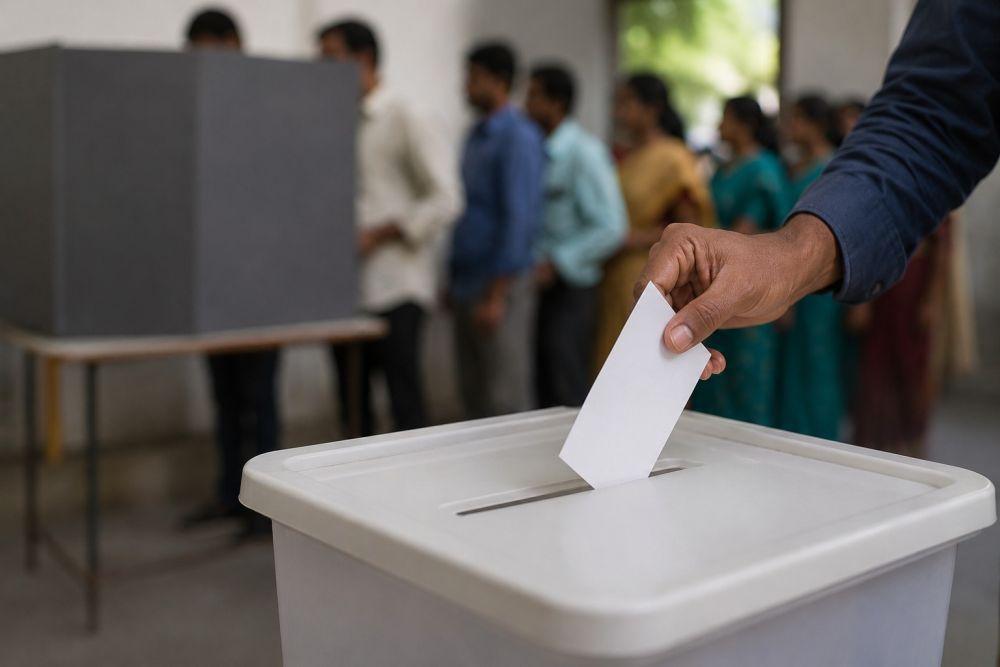
The process of enrolling new voters in Jharkhand following the Special Intensive Revision (SIR) of the electoral rolls has raised concerns within the state election machinery. As many as 6,722 polling booths across the state have so far received not a single Form 6 application from a new voter.
Chief Electoral Officer K Ravi Kumar has taken the matter seriously and directed all District Election Officers to conduct a booth-wise review and step up efforts to identify eligible young citizens who have not yet been registered as voters.
Ranchi has emerged as the district with the highest number of polling booths where no new voter application has been received. As many as 1,209 booths in the district currently have zero Form 6 applications. It is followed by Palamu with 592 booths, Hazaribagh with 572, Giridih with 416 and Dhanbad with 392 booths reporting no applications.
The election authorities are concerned not only about booths with zero applications but also about those receiving very few forms. Dhanbad has 1,243 polling booths where only one to five Form 6 applications have been received. The corresponding figures are 1,072 in Giridih, 981 in Ranchi, 936 in Palamu and 814 in Hazaribagh.
The issue assumes significance as the draft electoral roll under the SIR exercise was published on August 5. Citizens who turn 18 by October 1, 2026, and meet the eligibility requirements can now apply to have their names included in the electoral roll. The deadline for submitting Form 6 applications is September 15.
According to the election department, nearly two years have passed since the 2024 elections, and the state's voter population is expected to have increased by around four per cent annually. On this basis, authorities expect roughly 60 new voter applications from each polling booth.
The fact that thousands of booths have received no applications, therefore, has become a matter of concern for election officials. It could indicate that many eligible young citizens have not yet registered or are unaware of the enrolment process.
To address the gap, Booth Level Officers (BLOs) have been directed to conduct door-to-door visits to identify eligible new voters. Special awareness drives will also be organised in schools and colleges to encourage young people who have reached voting age to register. Citizens will also be informed about the online application process for voter registration.
At the same time, election authorities have issued a warning against attempts to manipulate voter records using fraudulent documents during the SIR exercise.
Officials have cautioned that adding one's name to another family's land record or genealogy document and using it to create a false claim of family connection will not be treated as a routine documentation error. Attempts to use such documents to secure electoral registration or establish the eligibility of an otherwise ineligible person could invite legal action.
The Chief Electoral Officer has also made it clear that falsely showing a non-family member as a descendant in another person's genealogy or providing incorrect information to obtain voter registration is punishable under the law. Attempts to get a foreign national's name included in the electoral roll will also attract legal consequences.
The election department is therefore facing a dual challenge: ensuring that every eligible young citizen gets an opportunity to register as a voter while simultaneously preventing fraudulent claims from entering the electoral roll.
With the September 15 deadline approaching, election officials are now focusing on thousands of polling booths where voter enrolment remains unusually low. The coming weeks are expected to see intensified door-to-door and institutional campaigns across Jharkhand to close this gap.



© Copyright
Reporter Post.All Rights Reserved |
Powered by: Aptilogic Software |
 |
Page rendered in 0.0125 seconds.
|
Page rendered in 0.0125 seconds.