Sun, October 25, 2026
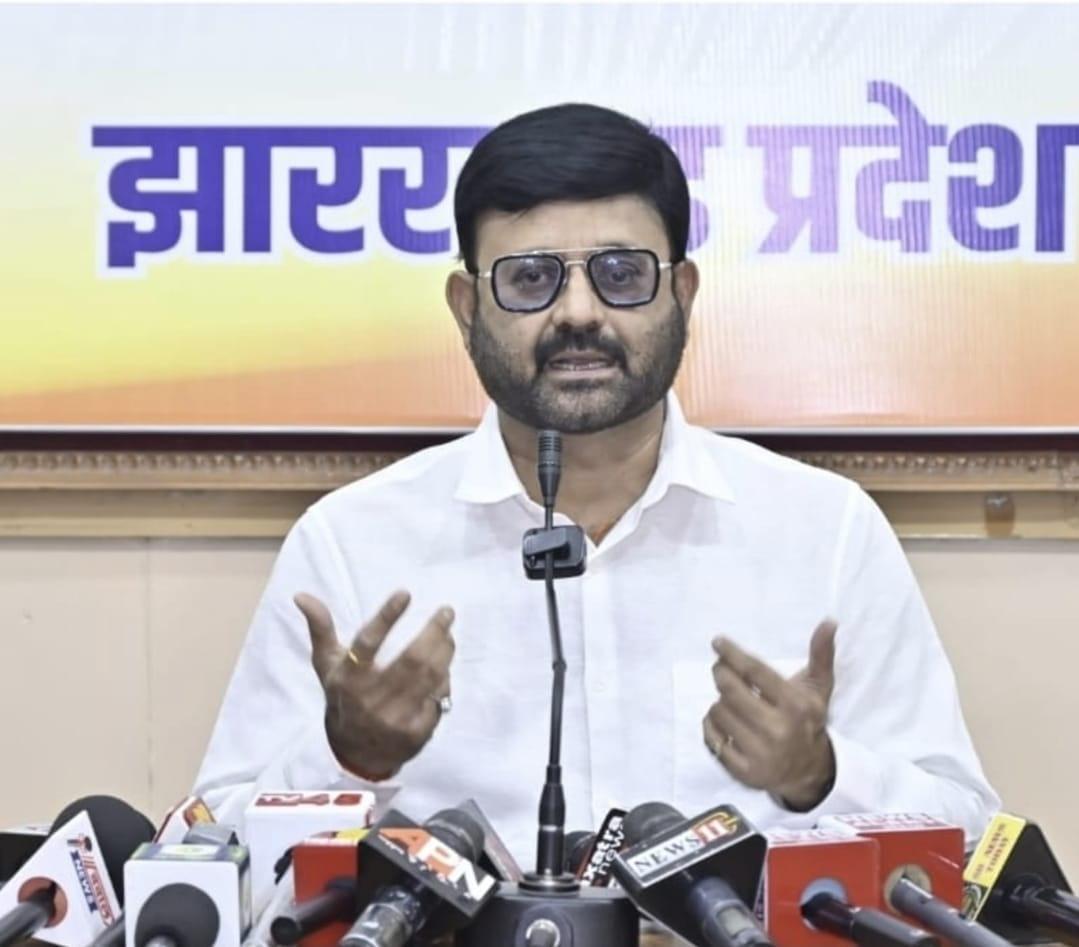
Photo: Reporter Post
BJP state chief spokesperson Pratul Shahdeo has launched a sharp attack on the Hemant Soren-led Jharkhand government, accusing it of using measures that, according to him, are aimed at curbing democratic dissent and restricting the voices of opposition parties, students and ordinary citizens.
Addressing a press briefing at the BJP office, Shahdeo alleged that the Jharkhand Mukti Morcha (JMM) and the state government were following a pattern similar to that adopted by the Nazi Party in Germany to suppress democratic voices.
He alleged that the Nazi regime had relied on criminal cases, police action and restrictions against dissenters and claimed that similar tactics were now being seen in Jharkhand. These comparisons were part of Shahdeo's political criticism of the state government.
Shahdeo expressed particular concern over reports of requirements for prior permission for protests and demonstrations and police verification related to social media activities.
He questioned whether citizens in Jharkhand would now need police permission to express their views. If such restrictions were being imposed, he said, it would reflect what he termed an "undeclared emergency mentality" rather than a democratic system.
Referring to the Constitution, Shahdeo said Article 19(1)(a) guarantees freedom of speech and expression, while Article 19(1)(b) provides citizens the right to assemble peacefully. He acknowledged that maintaining law and order was the responsibility of the government but said this responsibility should not become a means of silencing opposition leaders, students or ordinary citizens.
BJP questions government's handling of JPSC case
Shahdeo also questioned the state government's handling of the JPSC-related matter before the Jharkhand High Court.
He claimed that the Advocate General had received an advance copy of the case before it was heard. Despite this, he alleged, a junior advocate initially appeared on behalf of the government and did not oppose the defective petition.
He further claimed that during the second hearing, the Advocate General again asked a lawyer junior to him to present the government's position.
Shahdeo questioned why, when the government had prior information about the matter, the case was not entrusted to the Advocate General along with senior advocates from the Supreme Court.
He said students were seeking an explanation from the state government over the manner in which the matter was handled in court.
The allegations and comparisons made by Shahdeo represent the BJP's political position. No response from the Jharkhand government or the JMM to these specific allegations was included in the statement.


© Copyright
Reporter Post.All Rights Reserved |
Powered by: Aptilogic Software |
 |
Page rendered in 0.0113 seconds.
|
Page rendered in 0.0113 seconds.