Thu, October 22, 2026

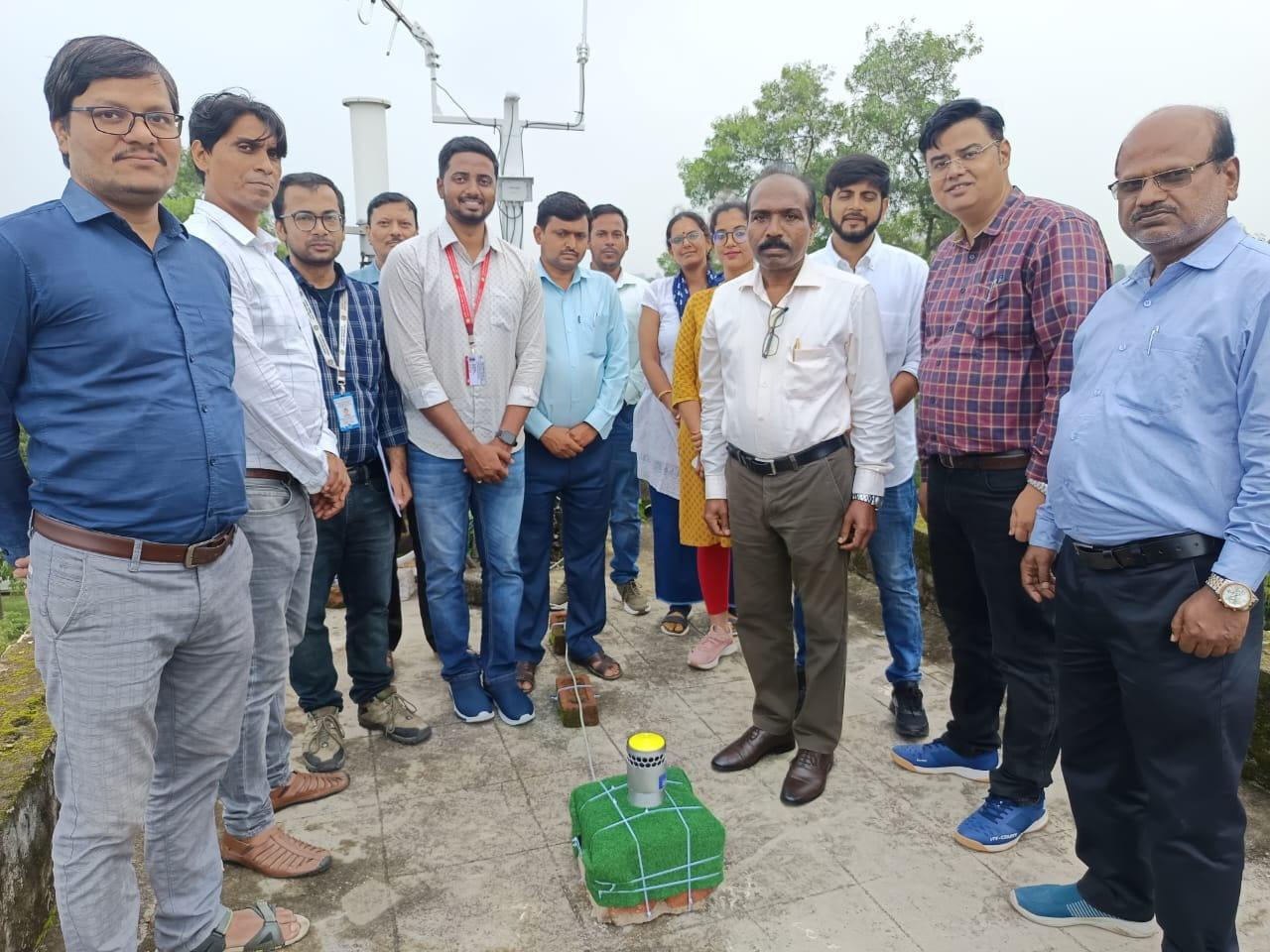
Photo: Reporter Post
The India Meteorological Department (IMD) has installed an advanced disdrometer at its Ranchi campus, marking the first installation of such a high-end rainfall measurement instrument in the Bihar-Jharkhand region.
The new equipment is expected to strengthen rainfall observation and research capabilities in the region by providing detailed information about the microphysical characteristics of rain. Unlike conventional rain gauges that primarily measure the amount of rainfall, a disdrometer can provide data on the size, number and velocity of individual raindrops.
What is a disdrometer?
A disdrometer is a specialised instrument used to study the characteristics of precipitation at a much finer scale. It measures the size and speed of raindrops and helps determine parameters such as raindrop size distribution, rainfall intensity and accumulated rainfall.
Such high-resolution observations can help scientists understand not just how much rain has fallen, but also how the rain is formed and how its characteristics change during different weather systems.
The instrument was installed by scientists from the Indian Institute of Tropical Meteorology (IITM), Pune — Dr Ambuj Kumar Jha, Scientist, and Rohit Patil, Project Scientist — with significant support from the IMD Ranchi team.
IMD Ranchi Chief Scientist Dr Baburaj, Senior Scientist Abhishek Anand and other officials were present during the installation.
Part of national rainfall observation network
The installation is part of the disdrometer network being developed in India under the Advanced Research and Technology (ART) project of IITM, Pune. The initiative is being implemented under the Ministry of Earth Sciences' 'Mission Mausam', which aims to strengthen India's weather observation, forecasting and research capabilities.
The network is designed to collect detailed rainfall data from different climatic regions across the country. Such observations can help scientists study the microphysical properties of precipitation and improve the understanding of how different types of rainfall develop.
Why the data matters for Jharkhand
The new facility could be particularly useful for studying rainfall patterns in Jharkhand, where weather systems originating in the Bay of Bengal frequently influence monsoon conditions. Low-pressure systems and other monsoon disturbances can bring widespread and occasionally intense rainfall to the region, while thunderstorms and convective systems also contribute significantly to local precipitation.
Data from the disdrometer will allow researchers to examine how raindrop characteristics change under different weather conditions. This can provide valuable ground-level observations for studying the behaviour of rainfall-producing systems over Ranchi and surrounding areas.
Dr Ambuj Kumar Jha of IITM, Pune, said the installation would strengthen rainfall observation capabilities in Ranchi and nearby areas and provide a new avenue for regional weather research.
The data is also expected to support the evaluation and improvement of radar-based rainfall estimation, weather observations and numerical weather prediction models. By combining detailed ground observations with radar and model data, scientists can potentially improve the accuracy of rainfall analysis and forecasting.
The installation, therefore, represents more than an upgrade to rainfall measurement at IMD Ranchi. It is part of a broader effort to build a modern, high-resolution precipitation observation network in India and improve scientific understanding of the microphysical processes that influence rainfall.



© Copyright
Reporter Post.All Rights Reserved |
Powered by: Aptilogic Software |
 |
Page rendered in 0.0117 seconds.
|
Page rendered in 0.0117 seconds.