Sun, October 18, 2026


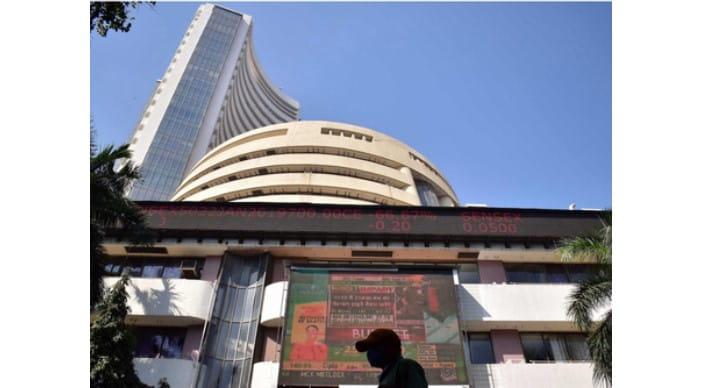
Mumbai: Indian stock markets ended lower on Friday as rising geopolitical tensions between Iran and the United States weighed on investor sentiment, but analysts believe the broader outlook for benchmark indices remains positive despite near-term volatility.
The weakness in the market followed reports of clashes near the Strait of Hormuz, which triggered caution among investors across global markets.
The BSE Sensex declined 0.67 per cent to close at 77,321, while the Nifty 50 slipped 0.55 per cent to settle at 24,193.
Despite Friday’s fall and sharp intra-day swings, both benchmark indices still managed to post weekly gains of over 0.70 per cent, reflecting underlying market strength.
In the broader market, the Nifty Smallcap 100 advanced 0.22 per cent, while the Nifty Midcap 100 edged down 0.15 per cent.
Market experts said the Sensex continues to maintain a positive technical structure even after the recent correction. Analysts noted that immediate downside support for the index is placed in the 54,600–54,200 zone if selling pressure intensifies again.
On the upside, 56,400 is being viewed as the first major resistance level, while 56,800 remains the next important supply zone for the market.
Experts advised traders to remain cautious and maintain disciplined risk management strategies while tracking key support and resistance levels for the market’s next directional move.
For the Nifty, analysts pointed out that the index ended the week at 24,176.15, registering a weekly gain of 178.60 points, or 0.74 per cent.
According to market observers, immediate resistance levels for the Nifty are placed at 24,500 and 24,600. On the downside, support is expected around 24,000 and 23,800. Analysts warned that a fall below the 23,800 mark could trigger fresh selling pressure in the market.
Given the ongoing geopolitical uncertainty and volatile trading conditions, experts have advised investors and traders to stick to strict stop-loss strategies and avoid aggressive positions in the near term.
With inputs from IANS





© Copyright
Reporter Post.All Rights Reserved |
Powered by: Aptilogic Software |
 |
Page rendered in 0.0092 seconds.
|
Page rendered in 0.0092 seconds.