Sun, October 18, 2026


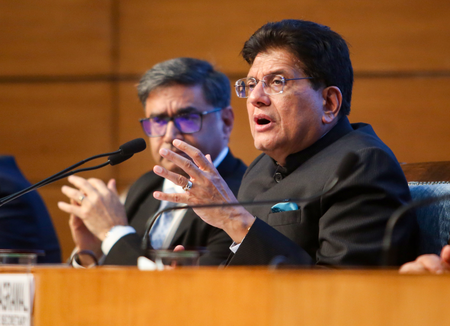
New Delhi: India remains well positioned in the evolving US trade landscape, though clarity on the finer details of the proposed agreement is still awaited, according to a report released on Wednesday.
The report by JM Financial Institutional Securities noted that trade policy announcements made by US President Donald Trump have historically undergone multiple revisions and reinterpretations. It also pointed out that the Indian government has neither confirmed halting Russian oil imports nor announced any plan to reduce tariffs on US goods to zero.
Additionally, the report observed that India has not provided a specific timeline regarding the proposed purchase of $500 billion worth of US energy, technology, agricultural products, coal, and other goods.
It highlighted that US tariff policies over the past year have frequently been announced, modified, escalated, and later softened, often driven by political and strategic considerations. The report cited examples such as developments in the US-Korea Free Trade Agreement and recent tariff threats directed at European Union nations.
According to the brokerage, sectors likely to benefit from tariff reductions include diamonds and jewellery, textiles, machinery, chemicals, and automobiles.
The report stated that India holds a relatively favourable position among Asian emerging markets under the new US tariff framework. India faces tariffs of around 18 per cent, which is lower than China’s approximately 30 per cent and marginally below the 19–20 per cent tariffs applicable to countries such as Bangladesh, Vietnam, Sri Lanka, Pakistan, Indonesia, and the Philippines. This tariff advantage could help India expand its market share in labour-intensive industries, particularly textiles.
The proposed US-India trade agreement is expected to improve dollar inflows, strengthen the balance of payments, support appreciation of the Indian rupee, and boost sentiment in the domestic equity markets. However, the report cautioned that the scale of foreign institutional investment may remain uncertain due to elevated market valuations.
Electronics, which constitute India’s largest export category to the US, have largely remained unaffected by earlier tariffs due to specific exemptions, the report noted.
The brokerage also warned that Indian agricultural producers could face increased competition if India eliminates tariffs on US agricultural imports.
The United States remains India’s largest export destination, accounting for nearly 20 per cent of the country’s total exports. Lower tariffs are expected to enhance bilateral trade flows and help restore India’s trade surplus with the US, which had steadily increased until FY25 before declining in FY26 due to the imposition of high tariffs of around 50 per cent.




© Copyright
Reporter Post.All Rights Reserved |
Powered by: Aptilogic Software |
 |
Page rendered in 0.0078 seconds.
|
Page rendered in 0.0078 seconds.