Thu, October 15, 2026

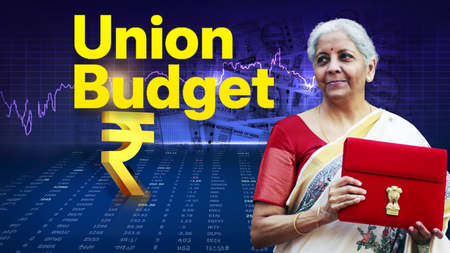
New Delhi — As Finance Minister Nirmala Sitharaman prepares to present the Union Budget 2026-27 in Parliament on February 1, economists expect the government to place strong emphasis on defence, infrastructure, capital expenditure, power and the affordable housing segment, while maintaining fiscal discipline amid global uncertainties.
Experts said the Budget is likely to carefully balance growth priorities with fiscal prudence, as policymakers navigate an environment marked by heightened geopolitical volatility. Sustaining growth momentum while continuing fiscal consolidation is expected to be a key theme.
Economists noted that the government has remained committed to fiscal consolidation, with the fiscal deficit narrowing from a Covid-induced peak of 9.2 per cent to an estimated 4.4 per cent in FY26. According to them, the Centre is expected to broadly maintain its “fiscal rectitude” and avoid any major deviation from this trajectory.
The Budget will also need to address near-term challenges arising from unprecedented global geopolitical flux, they added.
Finance Minister Sitharaman will present the 15th Budget of the Prime Minister Narendra Modi-led government on February 1. It will be the second full Budget of the National Democratic Alliance’s third consecutive term that began in 2024. Sitharaman will also create history as the first woman finance minister to present the Union Budget for the ninth consecutive time.
While the FY26 Budget focused more on boosting middle-class consumption through tax relief measures, economists said the FY27 Budget is likely to adopt a more selective approach towards stimulating consumption.
According to Motilal Oswal Financial Services Ltd’s ‘India Strategy’ report, the upcoming Budget is expected to increase focus on capital expenditure, particularly in strategically important sectors driven by current geopolitical considerations.
Market participants, meanwhile, are expected to closely track debt metrics, fiscal deficit outcomes and the government’s borrowing programme for the next financial year. The size of borrowings will be a critical factor for bond markets, according to a note by DBS Bank.
The recently tabled Economic Survey 2025-26 projected India’s GDP growth at 6.8–7.2 per cent in FY27, compared to 7.4 per cent in the current year, which is higher than prevailing market expectations.
In a notable development, India’s stock exchanges will remain open for a special live trading session on February 1, despite it being a Sunday, to mark the presentation of the Union Budget 2026-27.
With inputs from IANS



© Copyright
Reporter Post.All Rights Reserved |
Powered by: Aptilogic Software |
 |
Page rendered in 0.0229 seconds.
|
Page rendered in 0.0229 seconds.