Wed, October 14, 2026

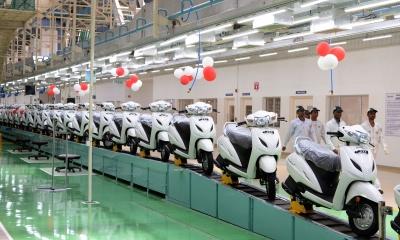
New Delhi: India’s automobile industry posted a robust performance in the October–December 2025 quarter, with passenger vehicle volumes rising 20 per cent year-on-year, driven by GST reforms, improving rural demand, and sustained festive-season momentum, according to a report released on Friday.
Financial services firm PL Capital noted that better affordability, easier access to financing, and recovering consumer confidence supported broad-based volume growth across passenger vehicles, two-wheelers, and commercial vehicles.
Passenger vehicle sales benefited from GST-led price reductions and year-end discounts, while inventory levels improved significantly. Inventory days declined to around 45 in November and further to about 38 in December, compared with over 55 days earlier.
Small cars saw sharper gains from GST cuts, even as SUVs continued to dominate sales, underscoring the ongoing trend of premiumisation in the market.
Two-wheeler volumes registered high-teen growth, led by strong demand for motorcycles in the 150cc and above categories. Certain models witnessed extended waiting periods due to robust retail sales and dealer restocking, the report said.
Commercial vehicles showed early signs of an upcycle in Q3FY26, supported by a revival in construction and mining activities following a prolonged monsoon season. Medium and heavy commercial vehicles outperformed light commercial vehicles, driven by rising replacement demand and a shift toward higher-tonnage vehicles.
Improved affordability following GST rate rationalisation also prompted fleet operators to advance purchase decisions, PL Capital noted.
Construction equipment sales rebounded, though growth remained moderate due to a high base effect caused by pre-buying ahead of emission norm changes last year. Tractor sales continued to gain momentum, aided by state subsidies and supportive government policies.
On the rural front, a healthy Kharif harvest and improved Rabi sowing acreage strengthened farm incomes and cash flows, translating into higher demand for entry-level vehicles and tractors.
Original equipment manufacturers (OEMs) benefited from new model launches, facelifts, and improved realisations, while exports remained stable amid a weakening rupee.
However, the report cautioned that rising raw material costs, including aluminium, copper, and platinum, along with the reintroduction of steel safeguard duties from January 2026, could put pressure on margins in the coming quarters.
With inputs from IANS



© Copyright
Reporter Post.All Rights Reserved |
Powered by: Aptilogic Software |
 |
Page rendered in 0.0128 seconds.
|
Page rendered in 0.0128 seconds.