Thu, October 22, 2026

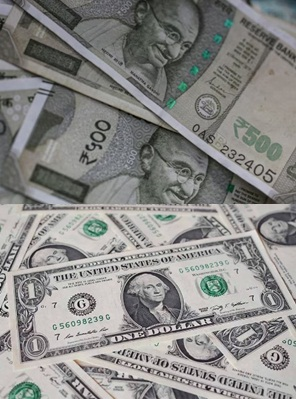
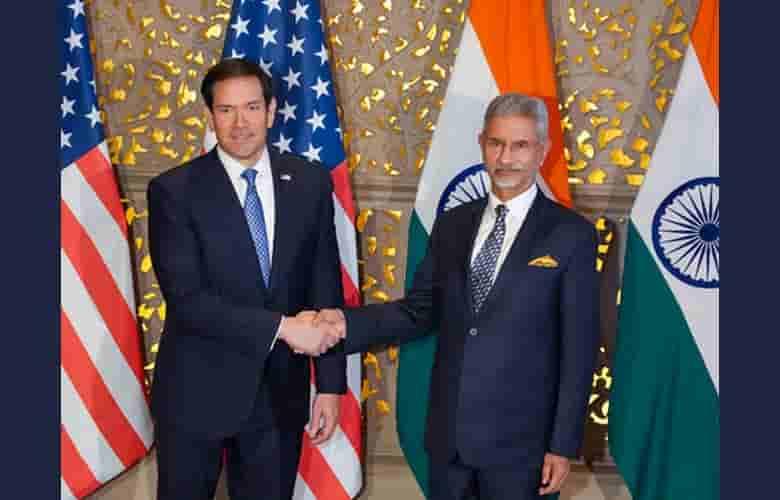
New Delhi: The Indian rupee is expected to stage a strong recovery in the second half of the next financial year, with geopolitical uncertainties—particularly delays in the India–US trade agreement—emerging as the key drivers behind its recent depreciation, according to an SBI Research report released on Wednesday.
The report highlighted that despite prolonged global uncertainty, rising protectionism and labour supply shocks, India’s trade data reflects notable resilience. SBI Group Chief Economic Advisor Dr Soumya Kanti Ghosh said that although the geopolitical risk index has moderated since April 2025, its average level between April and October 2025 remains significantly higher than the decadal average, indicating sustained pressure on the rupee.
Based on empirical analysis, Dr Ghosh noted that the rupee is currently in a depreciating phase but is likely to exit this regime. The domestic currency recently breached the psychologically important 90-per-dollar mark and crossed 91 against the US dollar on Tuesday.
However, the rupee recovered sharply on Wednesday, strengthening to as high as 90.25 during intraday trade, supported by softer crude oil prices and improved market sentiment.
The SBI report pointed out that the current decline represents the fastest fall of the rupee—measured in terms of days—scaled to a five-rupee movement against the dollar. In less than a year, the currency has weakened from 85 to 90 per US dollar.
According to the analysis, the depreciation has largely been driven by foreign portfolio investor (FPI) outflows, especially from equities after two years of strong inflows, coupled with uncertainty surrounding the India–US trade deal.
Since April 2, 2025, when the US announced broad tariff hikes across several economies, the Indian rupee has depreciated by 5.7 per cent against the dollar—the highest among major economies—despite intermittent periods of appreciation triggered by optimism over trade negotiations.
The report also noted that while the rupee is currently the most depreciated major currency, it is not the most volatile, suggesting that the imposition of a 50 per cent tariff on Indian goods has been a significant factor behind the ongoing depreciation phase.
With inputs from IANS



© Copyright
Reporter Post.All Rights Reserved |
Powered by: Aptilogic Software |
 |
Page rendered in 0.0112 seconds.
|
Page rendered in 0.0112 seconds.