Thu, October 15, 2026

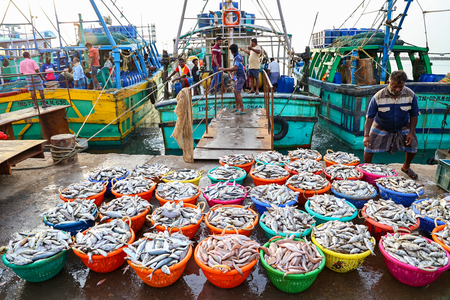
New Delhi- India’s fish production has increased by 38 per cent since the launch of the Pradhan Mantri Matsya Sampada Yojana (PMMSY) in 2020, rising from 141.60 lakh tonnes in 2019–20 to around 197.75 lakh tonnes in 2024–25, the Parliament was informed on Wednesday.
In a written reply in the Lok Sabha, Union Minister for Fisheries, Animal Husbandry and Dairying Rajeev Ranjan Singh said the growth has been primarily driven by the expansion of inland aquaculture, development of marine fisheries, strengthening of value-chain infrastructure, and targeted policy interventions under the PMMSY.
The minister noted that India’s fish and fishery product exports currently stand at Rs 62,408.45 crore, reflecting strong performance by the sector. Since the implementation of PMMSY in 2020–21, export earnings have increased by around 33.7 per cent, rising from Rs 46,662.85 crore in 2019–20 to Rs 62,408.45 crore in 2024–25.
India’s average aquaculture productivity has improved significantly, increasing to about 4.7 tonnes per hectare by early 2025 from nearly 3 tonnes per hectare prior to the launch of the scheme. The top five states in inland fish production are Andhra Pradesh, West Bengal, Uttar Pradesh, Bihar and Odisha, with Bihar ranking fourth, the minister added.
The Gross Value Added (GVA) of the fisheries sector during 2023–24 has been reported at Rs 3,68,124 crore, compared to Rs 2,12,087 crore in 2018–19. The sector’s share in the total GVA of agriculture has also increased from 7 per cent in 2018–19 to 7.55 per cent in 2023–24.
The Centre is focusing on technology adoption, aquaculture development and value addition across the fisheries value chain. Key interventions include quality fish seed production, expansion, diversification and intensification of aquaculture, promotion of export-oriented species, technology infusion, disease management and traceability, training and capacity building, and the creation of modern post-harvest infrastructure with integrated cold-chain and processing facilities.
Under PMMSY, technology infusion has been strengthened through the establishment of 52,058 reservoir cages, 22,057 RAS and biofloc units and raceways, and the approval of 1,525 sea cages, involving an investment of Rs 3,040.87 crore.
The Department of Fisheries has also partnered with research institutions under the Indian Council of Agricultural Research (ICAR) and private incubators to promote a robust fisheries start-up ecosystem.
Additionally, five fisheries business incubation centres have been set up to provide mentorship and training to fisheries start-ups, cooperatives, farmer producer organisations (FPOs) and self-help groups (SHGs). These include the LINAC-NCDC Fisheries Business Incubation Centre (LlFIC), Guwahati Biotech Park in Assam, the National Institute of Agricultural Extension Management (MANAGE) in Hyderabad, ICAR-Central Institute of Fisheries Education (CIFE) in Mumbai, and ICAR-Central Institute of Fisheries Technology (CIFT) in Kochi, the minister said.
— With inputs from IANS



© Copyright
Reporter Post.All Rights Reserved |
Powered by: Aptilogic Software |
 |
Page rendered in 0.0115 seconds.
|
Page rendered in 0.0115 seconds.