Fri, October 23, 2026

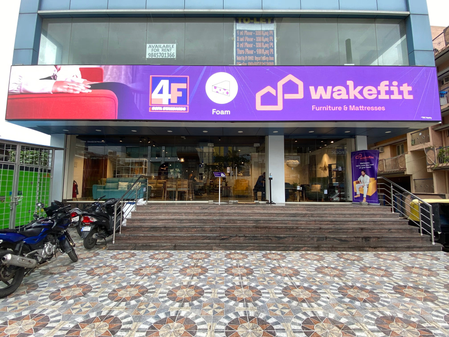
Mumbai: Shares of direct-to-consumer (D2C) home and furnishings brand Wakefit Innovations witnessed a muted debut on the stock market on Monday, slipping by as much as 9 per cent in early trade following moderate investor interest in its Rs 1,289-crore initial public offering (IPO).
The stock was listed at Rs 195 per share, the same as its issue price, on the National Stock Exchange (NSE). On the Bombay Stock Exchange (BSE), it opened marginally lower at Rs 194.10. Soon after listing, selling pressure emerged, dragging the stock down by up to 9 per cent during early trading hours.
Wakefit’s mainboard IPO was subscribed 2.52 times overall during the three-day bidding period from December 8 to December 10. The qualified institutional buyer (QIB) segment was subscribed 3.04 times, while the non-institutional investor category saw full subscription. Retail investors showed strong interest, with their portion subscribed 3.17 times.
Ahead of its listing, Wakefit shares were trading at a grey market premium of around Rs 5 per share, suggesting a potential listing gain of nearly 3 per cent. However, the actual debut fell short of expectations, underlining that grey market trends are only indicative and subject to rapid change. Market experts noted that investors may consider booking profits in case of sharp upside moves.
Prior to the IPO, the company raised Rs 580 crore from anchor investors, with participation from prominent institutional players such as Ashoka Whiteoak, HDFC Life, Prudential Hong Kong, HDFC Mutual Fund and Axis Mutual Fund. In November, Wakefit also secured Rs 56 crore in a pre-IPO round from DSP India Fund and 360 ONE Equity Opportunity Fund.
The IPO comprised a fresh issue of shares worth Rs 377.18 crore and an offer-for-sale (OFS) of 4.67 crore shares valued at around Rs 912 crore, taking the total issue size to Rs 1,289 crore.
Wakefit plans to utilise the proceeds from the fresh issue to expand its business footprint, including opening 117 new company-owned and company-operated stores, purchasing equipment and machinery, meeting lease-related expenses for existing stores, and funding marketing, advertising and general corporate purposes.
— IANS




© Copyright
Reporter Post.All Rights Reserved |
Powered by: Aptilogic Software |
 |
Page rendered in 0.0153 seconds.
|
Page rendered in 0.0153 seconds.