Thu, October 15, 2026

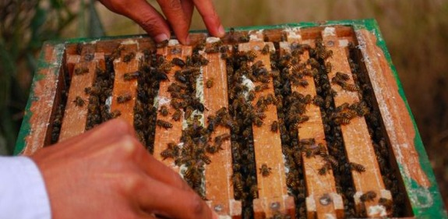
New Delhi — India has become the world’s second-largest exporter of natural honey, with exports touching 1.07 lakh metric tonnes (MT) worth $177.55 million in the financial year 2023–24, according to an official statement released on Sunday. This marks a remarkable jump from the 9th position in 2020, highlighting India’s rapid progress in the global honey trade.
The achievement comes under the government’s flagship initiative — the National Beekeeping and Honey Mission (NBHM) — a Central Sector Scheme launched to promote scientific beekeeping and the production of quality honey and other beehive products.
Implemented by the National Bee Board (NBB) under the Atmanirbhar Bharat programme, the scheme was initially rolled out with a budget of ?500 crore for three years (FY 2020–21 to 2022–23). It has since been extended until FY 2025–26, with a remaining outlay of ?370 crore from the original allocation.
To enhance transparency and product traceability, the government has introduced the Madhukranti Portal, an online platform for the registration and tracking of honey and other bee-derived products.
India’s diverse agro-climatic zones provide immense potential for large-scale beekeeping, honey production, and export. Recognising its vital role in rural development and agricultural sustainability, the Centre launched the NBHM as part of the broader “Sweet Revolution” — an ambitious initiative aimed at boosting apiculture to increase the supply of quality honey and improve farmers’ income through scientific, organised beekeeping.
Beekeeping is an agro-based rural activity, often practiced by farmers and landless labourers, and forms an integral component of the Integrated Farming System. It not only enhances crop productivity through pollination but also generates income from high-value beehive products such as beeswax, pollen, propolis, royal jelly, and bee venom, providing sustainable livelihoods for rural households.
The NBHM operates through three Mini Missions:
Mini Mission I: Focuses on increasing crop productivity through pollination and promoting scientific beekeeping.
Mini Mission II: Addresses post-harvest management — including the collection, processing, storage, marketing, and value addition of beehive products, while developing necessary infrastructure.
Mini Mission III: Concentrates on research and technology development tailored to regional needs.
India’s ascent in the global honey market not only reflects its success in agricultural innovation but also strengthens its position as a leader in sustainable rural enterprise and natural product exports.
With inputs from IANS



© Copyright
Reporter Post.All Rights Reserved |
Powered by: Aptilogic Software |
 |
Page rendered in 0.0107 seconds.
|
Page rendered in 0.0107 seconds.